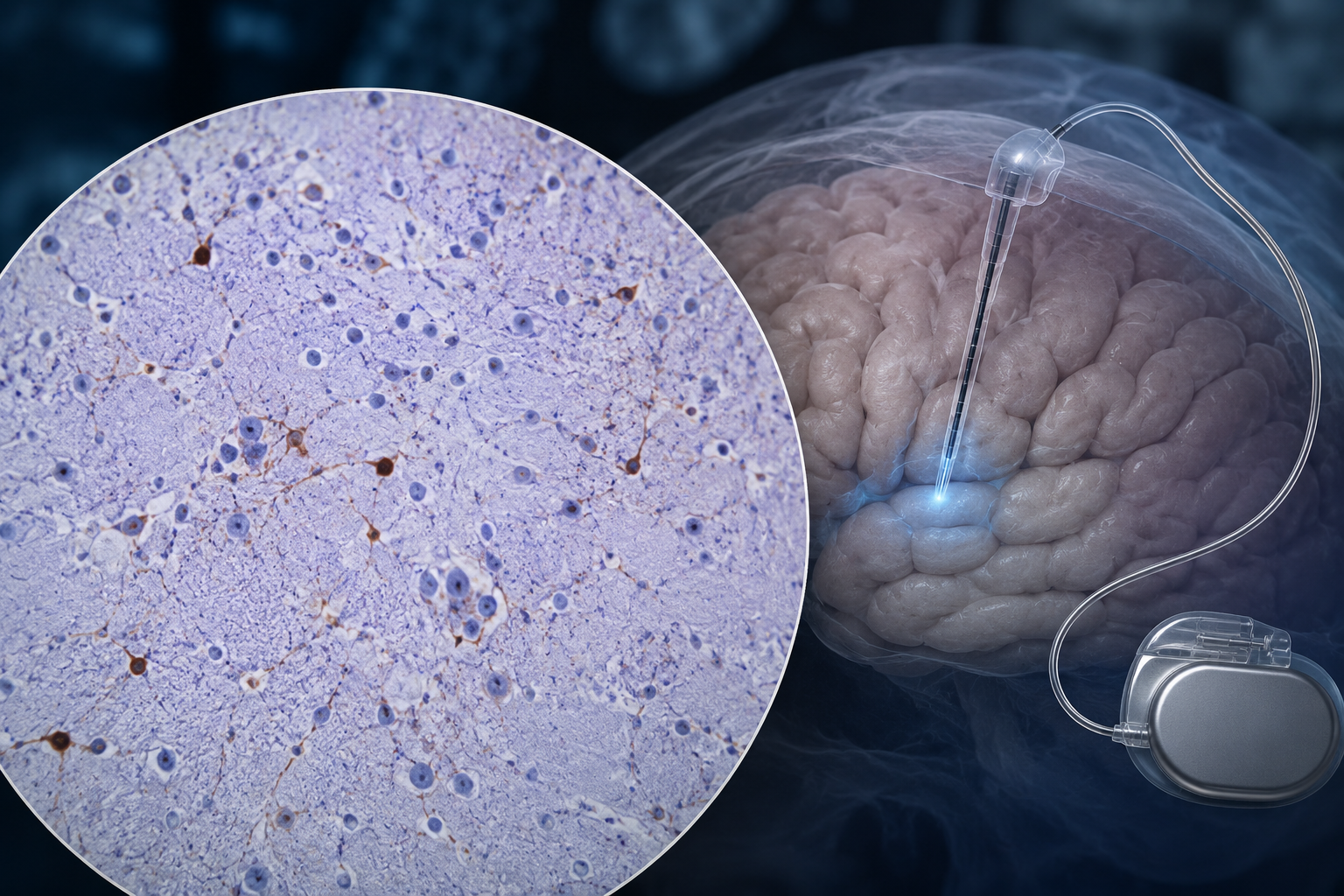
Pip: Welcome to The Movement Disorder Journal and News — where today's topic is the thing your brain does every night while you're unconscious and completely unavailable to take credit for it.
Mara: Chris Denny has been covering the glymphatic system — the brain's waste-clearance network — and what happens when researchers try to push it harder, including in people with Parkinson's disease. That's where we're headed.
Pip: Let's start with how the brain cleans itself, and what happens when that process breaks down.
Understanding the Brain's Overnight Cleanup Crew
Mara: The core question here is whether the brain's built-in waste-removal system can be deliberately activated — and whether doing so might matter for diseases like Parkinson's, where that system already appears to be struggling.
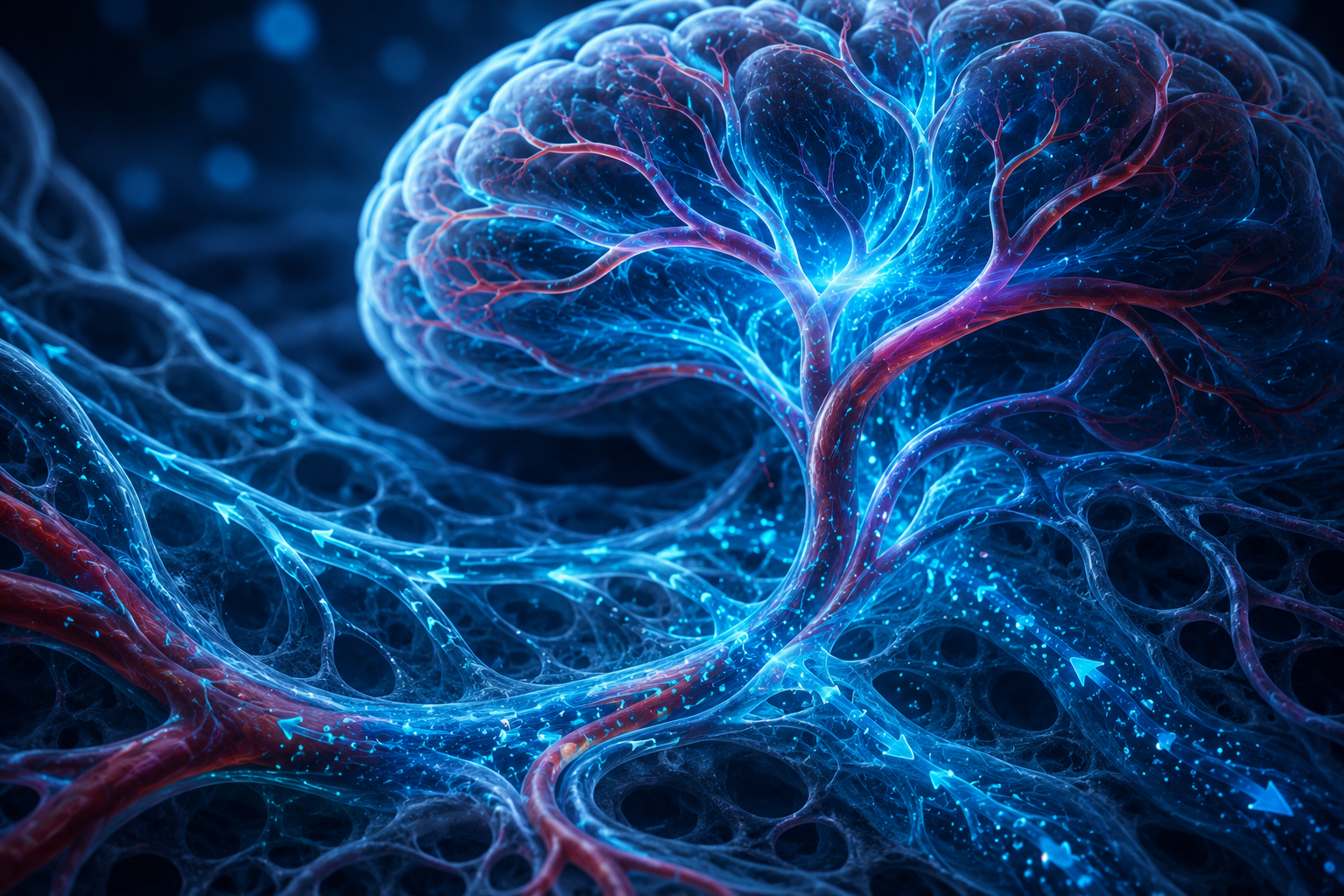
Pip: The mechanism is surprisingly mechanical. Cerebrospinal fluid circulates through the brain during sleep, essentially riding the pulse of your blood flow to flush out waste. The post describes it plainly as a "rinse cycle."
Mara: And what researchers wanted to know is whether that rinse cycle clears the specific proteins — beta-amyloid and tau — linked to Parkinson's and Alzheimer's before they accumulate and spread.
Pip: So the experiment is: what if you gave the brain a nudge? Specifically, controlled bursts of carbon dioxide — intermittent hypercapnia — to trigger vasodilation and push more cerebrospinal fluid through.
Mara: Sixty-three participants, thirty with Parkinson's and thirty-three healthy controls. The CO₂ mixture was five percent, against outdoor air's normal 0.04 percent — roughly 125 times the concentration we're ordinarily exposed to. Participants were monitored throughout for oxygen saturation, heart activity, and self-reported symptoms.
Pip: And the results showed something real. MRI scans confirmed stronger blood vessel activity and increased cerebrospinal fluid flow. But Parkinson's patients showed weaker responses across the board — slower brain reactions, less fluid movement — suggesting the disease itself is throttling the cleanup process.
Mara: The researchers put it directly: "Our findings suggest intermittent hypercapnia can potentially be used as a therapeutic strategy for activating the glymphatic pathway." They were careful to add this does not yet prove the therapy slows Parkinson's — but the mechanism appears to work.
Pip: What this means in practice is that blood tests after the sessions showed increased levels of alpha-synuclein, amyloid beta, and related proteins — waste being pushed out of the brain and into the bloodstream, where the body can clear it.
Mara: A second line of research adds context here. People with a prodromal Parkinson's warning condition called iRBD who had stronger glymphatic activity took significantly longer to convert to full Parkinson's disease. Better sleep and treating sleep apnea appear to strengthen the system. The implication is that the brain's cleaning capacity may act as a protective buffer years before major symptoms appear.
Pip: So the brain has a janitor, the janitor works nights, and in Parkinson's the janitor is getting slower — but researchers may have found a way to hand them a faster mop.
Mara: The researchers themselves frame it as a multi-angle approach — early detection, sleep health, environmental factors, and now potentially a clinical tool that could be as simple as breathing through a mask during a routine office visit.
Mara: The through-line across all of this is timing — intervening earlier, before the damage compounds, using systems the brain already has.
Pip: The brain was cleaning itself long before anyone was watching. Turns out, watching matters. More next time.
Discover more from
Subscribe to get the latest posts sent to your email.