



For nearly two decades, the Movement Disorder Society-Unified Parkinson’s Disease Rating Scale, better known as the MDS-UPDRS, has been one of the most trusted tools in Parkinson’s disease research. The four-part test has been used in clinics around the world and serves as a cornerstone for researchers conducting clinical trials by evaluating countless potential treatments since its official introduction in 2008. Because of that history, the MDS-UPDRS is viewed as the gold standard in Parkinson’s research and remains the most widely accepted benchmark against which new assessment tools must prove themselves.
There is a growing number of clinicians, research institutions, pharmaceutical companies, patient advocacy organizations, and even regulatory discussions, calling on the MDS-UPDRS to evolve with the new technologies that are advancing in Parkinson’s care. The question is no longer whether the MDS-UPDRS works. The question is whether it can keep up with the future of Parkinson’s research and the growing technology.
That may sound like a small distinction, but it is becoming one of the more relevant questions for researchers as they find that the MDS-UPDRS isn’t keeping up as newer technologies are being developed that will shortly overtake the current standards. With researchers searching for treatments capable of slowing or stopping Parkinson’s disease, advancing the MDS-UPDRS and future-proofing it could make all the difference.
Parkinson’s disease is a slow starter; symptoms take years to manifest for most people, especially in its earliest stages. Some researchers may spend years testing a promising therapy only to discover that the changes they hoped to measure were so small that they became difficult to separate from normal day-to-day fluctuations. When that happens, it becomes challenging to determine whether a treatment failed or whether the tools used to measure it simply were not sensitive enough to detect the effect. Over the past several years, multiple research groups have started looking more closely at that problem. For years, most of them relied on total scores, assuming that combining many symptoms creates the clearest picture of disease severity. Several studies have begun challenging that assumption, and similar arguments are being made for updating the scale.
According to Dr. Michael S. Okun, Author of the Parkinson’s Plan and Medical Advisor for the Parkinson’s Foundation, “The MDS-UPDRS and related Movement Disorder Society rating instruments have been among the most important advances in Parkinson’s disease research and care. They are rigorously validated, globally adopted, and continue to serve as the backbone of clinical trials and routine clinical decision-making. However, the future lies in complementing these powerful tools with more precise, objective, and continuous measurements made possible by computers, video analytics, wearable sensors, digital biomarkers, and artificial intelligence. The next generation of assessment will move beyond snapshots in the clinic toward a richer understanding of how Parkinson’s disease affects people in their daily lives, ultimately allowing us to deliver more personalized and effective care.”
There is little room to detect further worsening, and both patient and clinician must wait for the next visit to detect changes, depending on how the patient is feeling during the visit. Another reason is that the scale doesn’t factor in fatigue, sleep problems, anxiety, and depression, or the effects of medication, all of which can impact the score. If a patient is having a good day and the symptoms are not prevalent during the visit, the MDS-UPDRS doesn’t account for the worsening of the symptoms taking place unseen. Researchers have also long recognized that even experienced neurologists may not always score the same patient the same way, making it more difficult to detect small but meaningful changes in disease progression.
The first changes to the MDS-UPDRS didn’t come until 2003, when the first conversations about improving how Parkinson’s disease is measured came up. The Movement Disorder Society’s own Task Force on Rating Scales published formal critiques of existing rating scales and identified weaknesses that included ambiguities in the written text, inadequate instructions for raters, metric flaws, and a notable absence of screening questions for non-motor aspects of the disease. Because of those assessments, it set the process in motion that ultimately produced the MDS-UPDRS in 2008.
In other words, the scale that researchers are now questioning was itself born out of dissatisfaction with its predecessor. The parallel is difficult to ignore. Many of the arguments being made today about the MDS-UPDRS that it lacks sensitivity, that it may miss important changes in early disease, and that the field needs better ways to measure progression sound remarkably similar to the concerns that led researchers to rethink the original UPDRS more than two decades ago. The difference is that today’s conversation is being driven not only by clinicians and researchers, but also by advances in technology that were unimaginable when the MDS-UPDRS was first introduced. Now, that timeline continues, starting in 2019.
A published 2019 study in the Journal of Neurology asked a pointed question: Does the MDS-UPDRS actually have the precision to track progression in early Parkinson’s disease? The answer wasn’t encouraging. Researchers found that Parts II and III of the scale have psychometric limitations. In plain terms, the tool doesn’t measure what it claims to measure with enough reliability, and those limitations undercut its ability to capture motor symptoms in the early stages of the disease.
A 2019 preprint study: Assessing the predictive ability of the UPDRS for falls classification in early stage Parkinson’s disease, posted to arXiv on October 3, 2019, examined fall risk in early Parkinson’s disease and found that individual UPDRS items sometimes outperformed aggregate scores when predicting outcomes. In other words, specific symptoms occasionally provided more useful information than the overall score itself. Researchers studying tremor have arrived at similar conclusions.
In 2020, a computer vision study, “Vision-based Estimation of MDS-UPDRS Gait Scores for Assessing Parkinson’s Disease Motor Severity,” demonstrated automated gait severity estimation with approximately 81 percent balanced accuracy. Three years later, researchers reported that a home-based artificial intelligence system evaluating finger-tapping tasks achieved an average error rate of 0.59 compared with 0.79 for a certified human rater. While expert neurologists still performed better, the findings demonstrated that remote automated assessment is becoming increasingly realistic. The motivation behind these technologies is not simply automation.
In 2021, the International Council for Harmonisation reflection paper encouraged researchers to select, modify, or develop clinical outcome assessments capable of demonstrating meaningful change. FDA guidance has taken a similar approach, stating that sponsors may justify the use of an existing assessment, a modified assessment, or an entirely new assessment if evidence supports its intended use. That guidance does not signal the end of the MDS-UPDRS. If anything, it highlights the need for change.
In 2022, a multi-stakeholder initiative through the Critical Path Institute for Parkinson’s found that the limitations of existing patient-centered outcome assessments had already pushed industry sponsors to develop alternative endpoints and seek regulatory acceptance. This effort brought together pharmaceutical companies, researchers, patient advocates, disease foundations, and regulators, a sign that the frustration with existing tools had reached every corner of the Parkinson’s community. What makes this moment different is that the push for change is no longer coming just from academic researchers.
In 2022, a major roundtable organized by the Michael J. Fox Foundation, Parkinson’s UK, Parkinson Canada, industry representatives, researchers, regulators, and patient advocates reached a similar conclusion. Participants agreed that early Parkinson’s disease trials require outcome measures and digital health technologies that are sensitive to change and meaningful to patients. What began as researchers asking whether there couldn’t be something better has since spread across the entire Parkinson’s community; clinicians, patient advocates, and regulators are all part of the conversation now.
In 2023, an FDA guidance document (FDA-2023-D-0026) also surfaced indirectly, cited in the npj Parkinson’s Disease paper titled “Patient-focused drug development: incorporating clinical outcome assessments into endpoints for regulatory decision-making. “This is the FDA formally encouraging the field to think beyond existing tools.”
In 2024, a Movement Disorder Society abstract carried the attention-grabbing title, “Time To Rethink the Measurement of Tremor in Early-Stage Parkinson’s Disease.” After examining data from multiple cohorts, the investigators concluded that tremor items did not form a cohesive early-stage tremor subscale and suggested that tremor may need to be evaluated separately from bradykinesia and rigidity.
April 2025: Re-weighting MDS-UPDRS Part II Items for Optimal Sensitivity to Parkinson’s Disease Progression Using Parkinson’s Progression Markers Initiative Natural History Data. “Traditional measures used in clinical trials of disease-modifying treatments in early Parkinson’s disease may fail to detect treatment effects on patients’ daily functioning over feasible study timeframes for otherwise effective treatments.”
In 2025 this study appeared in Frontiers in Digital Health: A novel machine learning based framework for developing composite digital biomarkers of disease progression, Its takeaway of the MDS-UPDRS: “current methods of measuring disease progression of neurodegenerative disorders, including Parkinson’s disease, largely rely on composite clinical rating scales, which are prone to subjective biases and lack the sensitivity to detect progression signals in a timely manner.”
In June 2025, the MDS published Digital outcomes as biomarkers of disease progression in early Parkinson’s disease: A systematic review, and several of its findings landed with some force. The authors noted that three digital health technologies detected longitudinal changes that clinical scales like the MDS-UPDRS simply missed. One wearable device alone reported a larger effect size for digital measures over time than the MDS-UPDRS could produce. The message from the review was direct: there is an urgent need to develop clinical outcome assessments suited for trials of novel treatments in early Parkinson’s disease, and future studies must use adequately powered sample sizes, assess multiple clinical dimensions, and ensure the validity and reliability of the digital measures being used.
One of the strongest examples came in 2025 when researchers published a study in npj Parkinson’s Disease examining whether the motor examination portion of the MDS-UPDRS was ideally suited for early-stage Parkinson’s disease titled “Optimizing Parkinson’s disease progression scales using computational methods.” Using data from the Parkinson’s Progression Markers Initiative, they analyzed more than 1,900 untreated assessments and over 3,200 total evaluations. Their conclusion was striking. The researchers wrote that the MDS-UPDRS “was not specifically developed for early-stage PD” and identified a 15-item sub-score focused on bradykinesia and rigidity that demonstrated stronger measurement properties than the broader motor examination in early disease.
In June of 2026, NeuraLight, an AI digital health company based out of Tel Aviv, released a study with a finding that cuts to the heart of one of Parkinson’s research’s most persistent problems. The research, titled: Changes in Saccadic Hypometria over Time to Monitor Parkinson’s Disease Progression, co-authored by the very developers of the MDS-UPDRS, Professor Chris Goetz and Professor Olivier Rascol, lends it credibility to the growing body of evidence that is too difficult to ignore. What they found was striking: eye movement-based (oculometric) biomarkers detected measurable progression over a relatively short period, while traditional clinical scores did not change significantly. They accomplished this using NeuraLight’s software-based platform running on nothing more than a webcam and a tablet. Their findings added to a growing body of evidence that objective, accurate technologies can capture patient disease progression better than using the MDS-UPDRS alone.
These articles and comments reflect how researchers are calling out to the MDS and the community at large that the MDS-UPDRS needs to change and adapt to the growing technology and advancements in assessment. Parkinson’s disease has traditionally been measured as a collection of symptoms folded into a single score, but increasingly, researchers are asking whether different symptoms progress differently enough that they deserve their own measurement strategies. A question that anyone living with Parkinson’s disease would understand instinctively. Symptoms can shift from one moment to the next, and something as simple as a good night’s sleep can make all the difference. So can stress, medication timing, illness, fatigue, or even the circumstances surrounding a clinic visit.
Researchers have long recognized that even experienced clinicians don’t always score the same patient the same way, and sometimes the same clinician won’t either. The 2025 npj Parkinson’s Disease study acknowledged this directly: “It has been demonstrated that inter-rater variability can limit the utility of clinician-rated scales such as the MDS-UPDRS as research tools.” Simplified, it means: the authors are saying that even their redesigned sub-score could be affected if clinicians perform or score the assessment differently, which is why it is so important for the need of having uniform scoring methods.

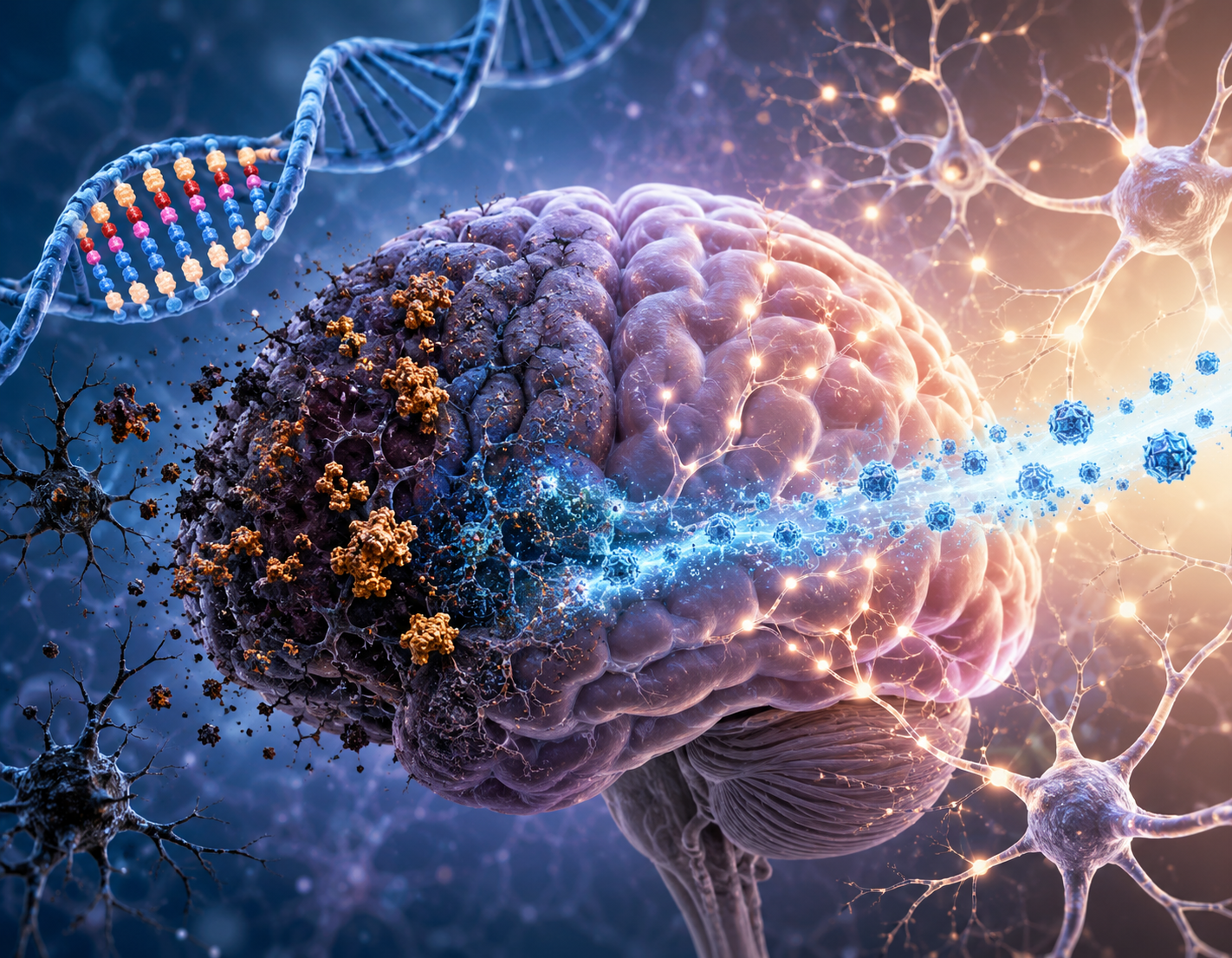
The evolution of Parkinson’s disease measurement, from traditional clinical assessments to emerging digital biomarkers and artificial intelligence. Image by Chris Denny/ChatGPT.
These concerns have helped fuel one of the fastest-growing areas of Parkinson’s research: digital biomarkers. Around the world, researchers are developing systems that use eye tracking, wearable sensors like the Apple Watch, smartphone applications like VisionMD, keyboard analysis using Keysense, voice analysis, and artificial intelligence to measure Parkinson’s disease in ways that go far beyond a traditional office visit. Some systems analyze how a person walks. Others evaluate finger tapping through a webcam. Some researchers are building artificial intelligence models capable of estimating Parkinson’s severity scores from video recordings. They point toward a future where objective measurements collected frequently in real-world environments may reveal changes that are difficult to detect during occasional clinic visits. That shift, from snapshots to a continuous picture, may change what researchers are able to see entirely. What was once theoretical is becoming measurable, and the MDS-UPDRS will have to answer for the gap.
The promise of digital biomarkers depends on a question researchers haven’t fully answered yet: whose data are we actually comparing? A smartwatch worn in a clinic in Boston captures motion data under different conditions than one used in a trial site in rural Kentucky. Hardware matters more than the field has acknowledged. When researchers deploy webcams to capture facial expression or movement, the gap between a 720p consumer camera and a 4K clinical system isn’t just a question of image quality; it’s a question of what the algorithm ever gets to see. The same logic applies to microphones used for voice analysis and to the sensors embedded in wearables. Much like the smartphone, the computational power of the processor will help drive the technology behind these devices, making them even more advanced. But without agreed-upon minimum standards across devices and study sites, the data collected today may not be comparable to the data collected tomorrow, or anywhere else.
Researchers aren’t looking to throw out one of the most successful tools in Parkinson’s disease research; they’re looking to build on it. Some are developing shorter, more targeted versions and are exploring ways to find a way to bring the two together to help make a smarter version of a reliable standard everyone follows.
How do you take then, and bring it to now, and forward into the future? The answer matters, not just for the science, but for the people living with Parkinson’s disease today who are waiting on treatments that can’t be proven without better tools to measure them. Before researchers and clinicians can prove a treatment slows Parkinson’s disease, they first need a reliable way to measure that change. In that sense, the future of Parkinson’s care may depend not only on new treatments, but also on better ways to track the disease by bringing it into the 21st century and beyond.

Discover more from
Subscribe to get the latest posts sent to your email.


Leave a Reply