Photo Credit: Adobe Firefly for C.Denny
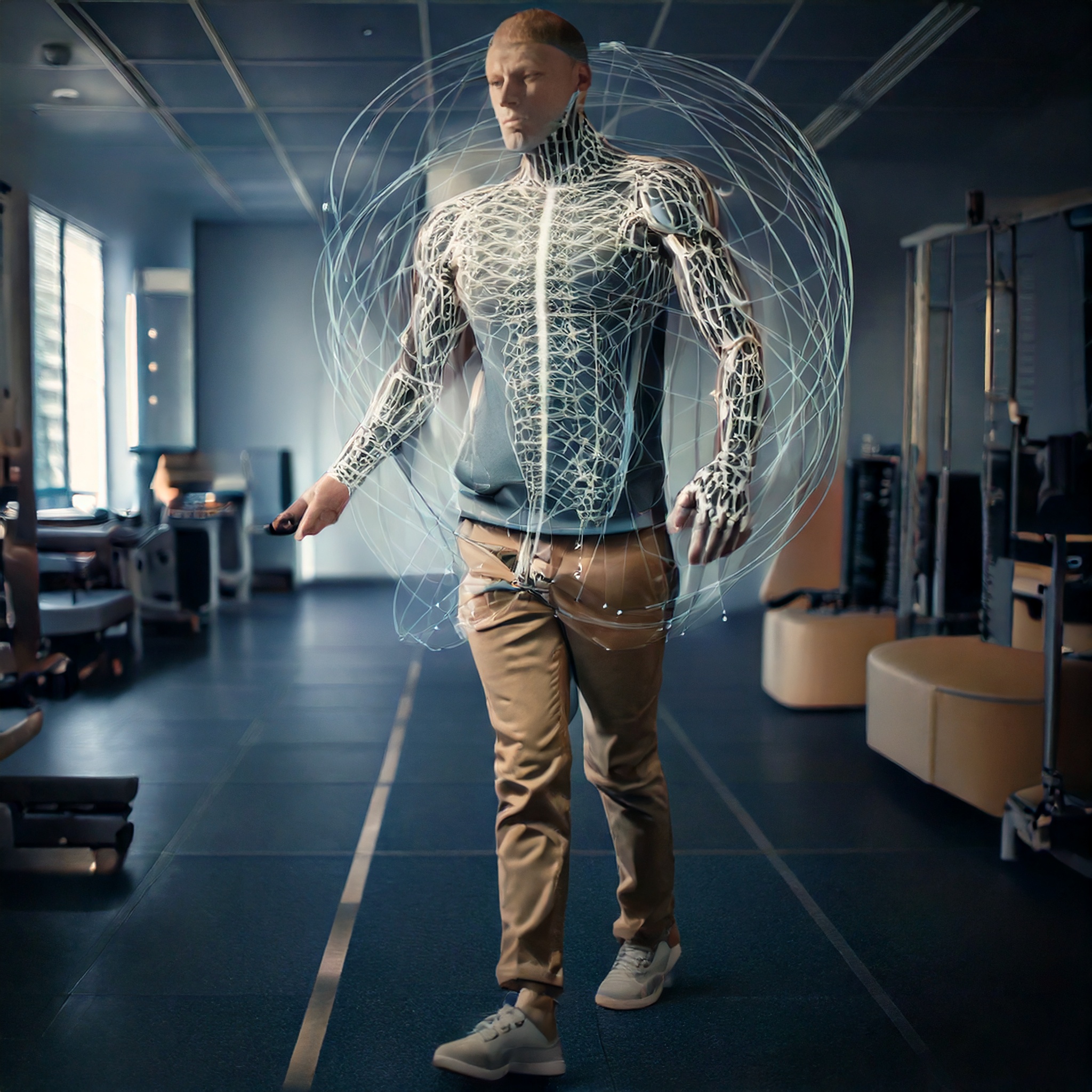
Dr. Diego Guarin, Assistant Professor in the Department of Applied Physiology & Kinesiology of the University of Florida’s College of Health and Human Performance, Dr. Joshua K Wong, Department of Neurology, University of Florida, doctorate students Gabriela Acevedo and Carolina Calonge, with Florian Lange & Robert Peach from the Department of Neurology at the University of Würzburg, Germany have developed a revolutionary new software using open-source to help analyze motor function in movement disorders using video-based analysis deep learning called VisionMD. The video software performs an analysis of a person’s motion, speed, and acceleration to diagnose symptoms of movement disorders like Parkinson’s without the need for specialized hardware or cloud-based processing, helping to protect patient privacy.
Gabriella Acevedo: “So, our research has a lot of biomedical engineering background, and we focus on movement disorders. We are trying to use the new AI techniques, specifically computer vision techniques, to help in the assessment. We apply all these new AI techniques to get a better sense of how the person is moving and the severity of their motor function, with the idea of developing a technique that can be used to improve the assessment, diagnosis, and monitoring of different movement disorders. I specifically focus on Parkinson’s disease. The VisionMD app that we developed was tried in Parkinson’s disease patients; however, these techniques and tools can be applied to a general population of movement disorders.”
Beginnings
Dr. Guarin started the idea of VisionMD in 2019, trying to decide how to use artificial intelligence or A.I. to quantify movement and then use it to produce clinical results, “but the app itself took probably one year to develop. So, we are a very small team, says Dr. Guarin. Basically, myself and a few students, including Gabriela, Carolina, and some computer science students. Developing the app itself took a while, I created the first prototype, and then from there, we included additional people who helped us to improve the app, test the app, and make it more usable and then we had to interact with clinicians to say what is useful, what is not useful, and that also takes a while. Probably, I would say one year from saying we want to do this, to have it ready to use on the computer.”
The foundations of VisionMD are built around The Movement Disorders Society Unified Parkinson’s Disease Rating Scale (MDS-UPDRS) Part III Motor Examination, created by the International Parkinson and Movement Disorder Society to assess the severity and progression of both motor and non-motor experiences and complications of patients with Parkinson’s (a neurological disorder that affects the movement, balance, and coordination of more than one million people in the U.S.). VisionMD utilizes MDS-UPDRS Part III as a framework to offer a scalable, user-friendly tool for evaluating motor symptoms in Parkinson’s and other movement disorders on which VisionMD operates.

MediaPipe
Integrated with Google’s MediaPipe framework, VisionMD developers utilize learning models to analyze videos uploaded to the software. MediaPipe offers pre-built solutions, including face detection, body pose estimation, and hand tracking, enabling developers to incorporate complex capabilities without having to build them from the ground up.
Dr. Guarin says MediaPipe is very user-friendly: “It becomes a black box at some point where you input something in, and it gives you something out says Dr. Guarin, so we input images into it, and it gives us the location of certain body positions. The other important point is that MediaPipe is not an all-powerful solution. We also had to make our own models and create our own solutions to cases where MediaPipe fails.”Conditions like Essential Tremor require custom models, which must be built because MediaPipe has difficulty quantifying those kinds of measurements.“We are working on that right now, and we hope that in the future, it’s going to be part of Vision MD. MediaPipe is good at quantifying movements like finger tapping or hand movements, but for other movements, it just doesn’t work.”
According to Dr. Guarin, results in real-time using a mobile phone are in development. Work is still underway to balance the accuracy and speed at which the software models are generated to provide accurate results for users of the software at home or by medical personnel in a professional environment.
How VisionMD Works
The software operates through a three-step process: Subject Selection, Task Selection, and Task Analysis.

Image source: www.VisionMD.ai.

Image source: www.VisionMD.ai.

Image source: www.VisionMD.ai.
Medical professionals and users can store the results of VisionMD’s analysis for future reference and comparisons.
Kinematics
What is Kinematics? Kinematics describes the motion of objects and a group of objects without considering the sources that cause them to move. “Basically, we want to study how people move,” says Dr. Guarin, “and if you have a disorder, you’re going to move differently than if you don’t. So, your movement reflects the state of the brain, and if there is an issue in the brain, the movement is going to reflect that. Sometimes, it’s easy to see, and clinicians can quantify it relatively easily. Other times, it’s not that easy to see, and the changes are subtle, so you need additional tools to quantify it, and what we are doing is providing those tools. When you produce some movement, the brain is the one that controls how the movement is produced. If there is something in the brain that is different from a healthy person, then that is going to be reflected in the movement. We know, for instance, in Parkinson’s disease, we know that people move at lower speeds than healthy controls, and that’s because of the damage in the brain. It influences the way that you start and the way that you move. We know in tremors, there are other pieces of the brain that result in exaggerated movements. Those are the tremors that you see, and so that is an issue in the brain that is reflected in the movement. So, if we can’t quantify the movement, and if there is something abnormal about the movement, then we know something going on in the brain. So, at least in the case of a Parkinson’s patient, it will leave a record of, say, a movement, and you’re able to tell the defects.”
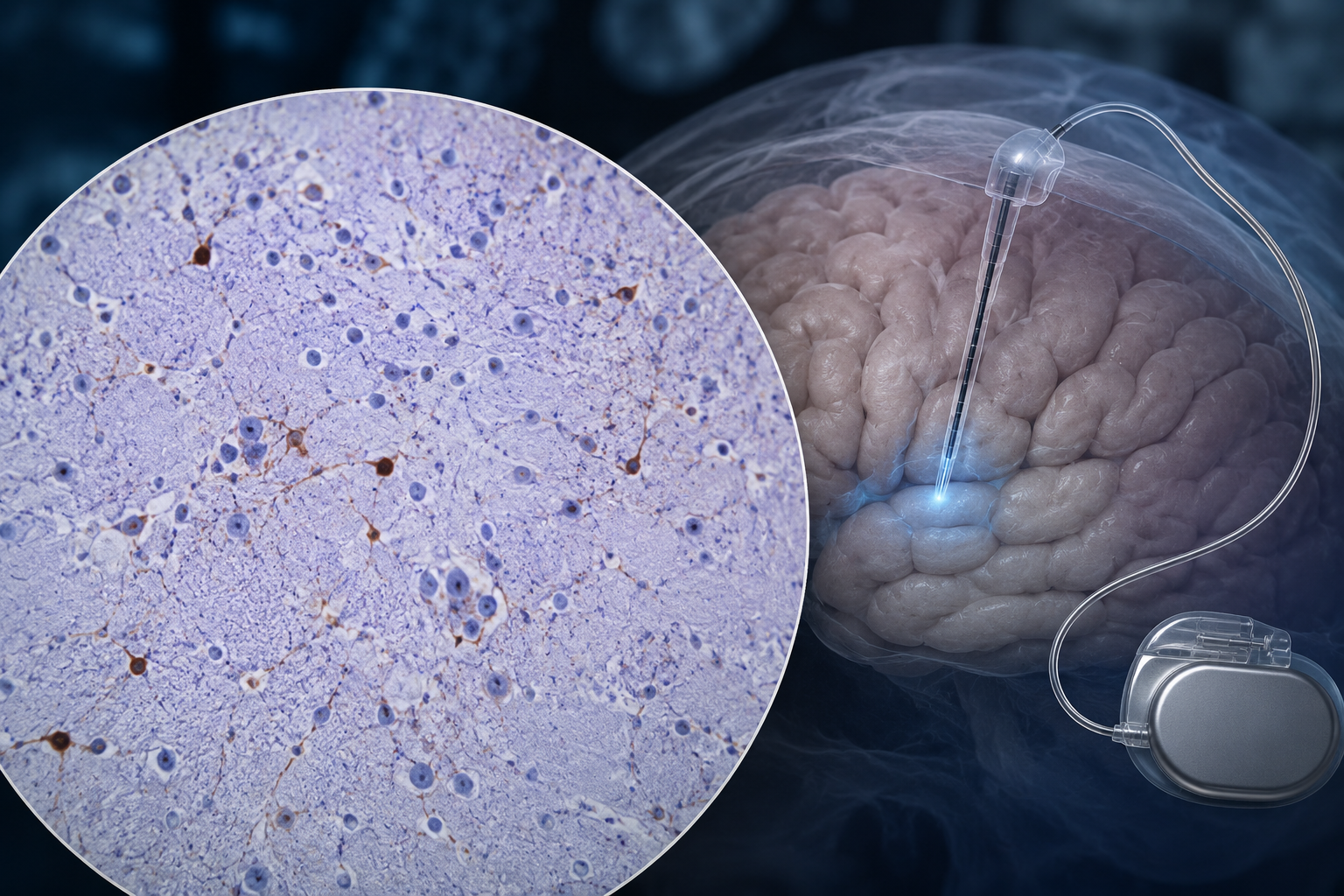
The software was also tested using videos of patients undergoing deep brain stimulation and those receiving medication. The application successfully identified the physiological changes anticipated as a result of the treatments those patients received. These tests were conducted using standard clinical computers.
VisionMD supports finger tapping, hand movements, leg agility, and toe-tapping, with future enhancements promising postural (involuntary shaking when holding a body part against gravity) and kinetic (involuntary rhythmic shaking during voluntary movements) tremors of the hand, rest tremor amplitude (a measure of the size of a tremor occurring when a person is at rest), and other related orders common in Parkinson’s disease.
Platforms and Privacy
VisionMD runs on Windows, macOS, and Linux, using the Chrome browser. The software was designed using Python on the backend and JavaScript for the interface. With its open-source approach and its ability to scale, the software can be configured as needed by researchers and clinicians, making the software highly adaptable versus the closed platforms developed by other companies like KELVIN, PARK, and FastEval
Dr. Guarin says concerns over privacy and corporate policies of how a customer’s data is handled from companies like Kelvin and Fast Track inspired the creation of VisionMD due to citing their lack of transparency, noting “there’s not a sense of what is going on with the data when we notice those two failures. Users have to pay to process the data,(Kelvin), and second, (Fast Track) the data you send somewhere and you don’t know what happens to it, that inspired us to make VisionMD, which you don’t pay, it’s free.” VisionMD is stored locally and the data stays on your device.
“The goal is to have people able to use this software in their homes. It has to be models that are good, but at the same time have low computing needs, so we are trying to have a balance. We tried to generate models that are large and need a good GPU, and run models that are smaller that don’t need that, then compare how good one is versus the other. We keep trying to make models as light as possible so they can run on all computers. Vision MD is great because it runs on most computers.”
The source files can be found here on GitHub, and the article is posted on Nature Portfolio – NPJ Parkinson’s Disease or go to www.VisionMD.ai.
Click here to see a demo of VisionMD on YouTube.
Discover more from
Subscribe to get the latest posts sent to your email.