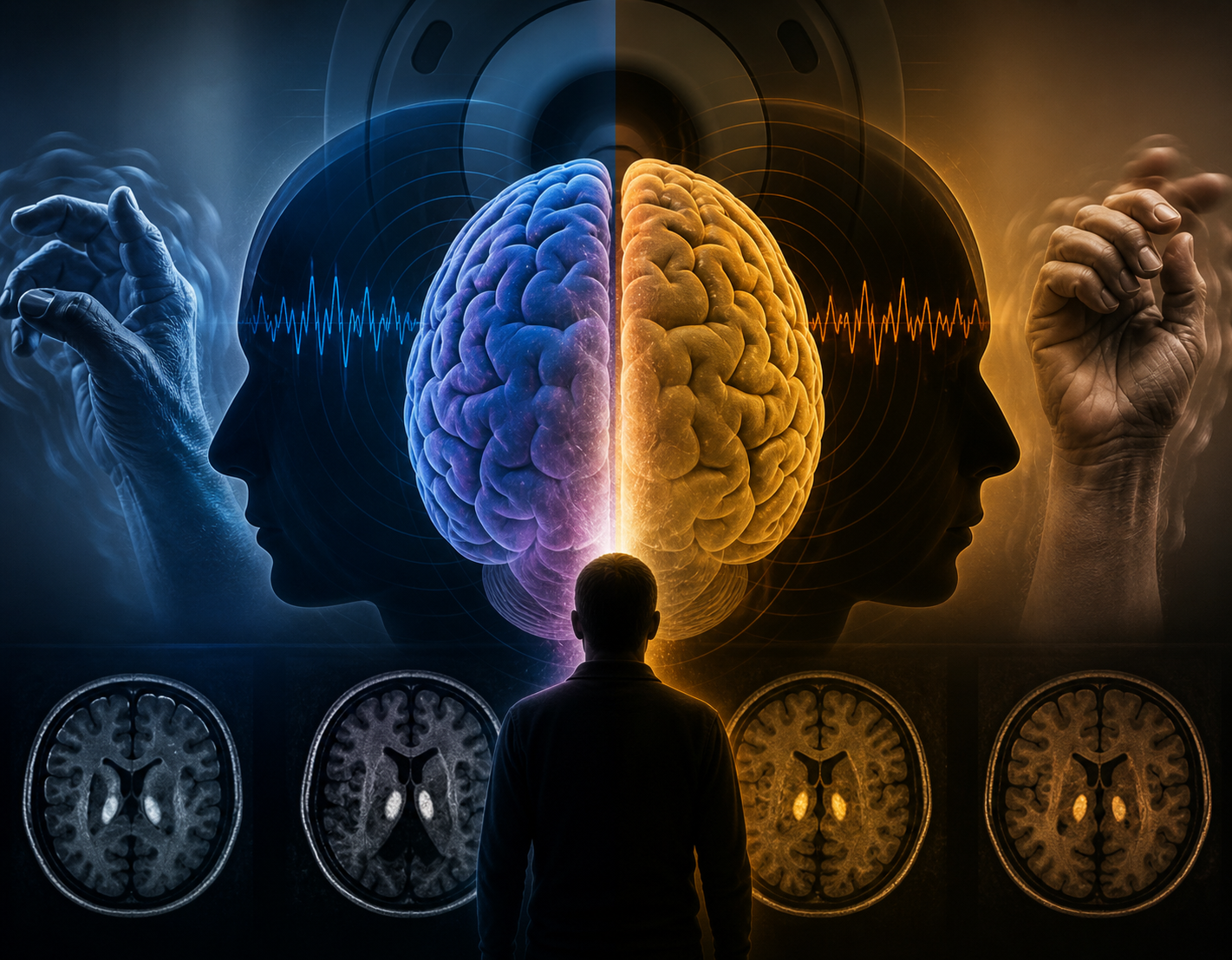
We all toss and turn in bed at night, with some nights worse than others. Getting a good night’s sleep is key to good health. For anyone diagnosed with Essential Tremor (ET), a good night’s sleep might be harder to come by. ET is an involuntary movement disorder thought to be caused by miscommunication in the brain’s neurological network, passed down from a parent to their children. There are a lot of physical (motor) symptoms with the disease, but there are also a lot of non-motor issues that come with it as well.
In one such study appearing in the European Journal of Neurology, Chinese researchers explored one of those symptoms…sleep. Using the REM Sleep Behavior Disorder Questionnaire – Hong Kong (RBDQ-HK) to screen for Probable REM Sleep Behavior Disorder (pRBD), researchers wanted to know how common pRBD was in patients with ET, whether ET patients with pRBD looked clinically different (motor + non-motor features), and what factors are linked to having pRBD in ET?
From May 2020 to March 2025, 1297 patients were recruited and measured using several testing methods, including RBDQ-HK, Tremor severity: TETRAS (Essential Tremor Rating Assessment Scale), Non-motor burden: NMSS (Non-Motor Symptoms Scale), which covers a variety of symptoms related to several movement disorders, and the MMSE used for Cognition.
The results of this study flagged 1 in 9 people, or 11.6% (150 out of 1297), with Essential Tremor as having screened positive for REM sleep behavior disorder symptoms. These individuals tended to have more severe tremors affecting their voice, face, and other midline areas, tremor at rest, and an overall worsening of non-motor symptoms.
The study also shows that the chances of this are rare for people under the age of 20, but increase as people get older, with the highest percentage observed among those in their 80s. In this age group, nearly one in five people (approximately 19%) are affected.
More facts from the research include: Those who screened positive included men and women around the age of 60, having a tremor onset later in life, and higher non-motor symptom scores as factors. Researchers also saw no differences in family histories, smoking or alcohol use, or BMI between the patients who participated in the study.
More revealing information from the study says that people with ET who also had pRBD were more likely to have tremors centered in the middle of the body (head, voice, jaw, or midsection) and more likely to have tremors while at rest. Focusing on the type of tremor, not how strong it was.
Lower education was something else researchers included as relevant in the study; the authors found that people with less education were more likely to have pRBD, with each extra year of education slightly lowering their risk. For those with 12 or more years of education, they had the lowest rate of 6%, 6 to 12 years were around 13%, and those with less than 6 years had the highest rate of 20%. Researchers point to patient cognitive reserve, with someone having more years of education, which may help the brain better handle the changes made by the disease, and suggest the idea of a higher risk of developing Parkinson’s disease. The study didn’t follow patients over a long period of time, so there is no evidence that any of the patients will develop Parkinson’s symptoms.
For each person with higher non-motor symptoms, including sleep problems, mood swings, fatigue, or more trouble thinking, these people were more likely to have pRBD; the more symptoms, the higher risk. Among people with the very highest symptom scores, more than one in three screened positive for pRBD.
Looking for data comparisons, researchers reviewed studies from 12 studies from PubMed, 8 studies that used questionnaires to screen for possible RBD (including their own), and 4 studies that confirmed RBD using sleep lab testing. Using this information, they were able to crunch the numbers and make an estimation of how common RBD is in people with ET, with a margin of error. Roughly 1 in 6 people with ET screen positive for pRBD, and about 1 in 7 have it confirmed on formal sleep testing.
Researchers conclude that pRBD has helped to identify a distinct subgroup of those with ET with more resting and midline (tremor that affects the center of the body) tremors and those with worse non-motor symptoms in comparison to other patients with the disease. They also conclude that RBD is much more common in Parkinson’s Disease and rare in the general population, with Essential Tremor falling somewhere in between.
What Researchers Make Clear about the Limitations of Their Study
There were no sleep lab tests done to confirm RBD; they relied solely on questionnaires filled out by the participants, with no firm diagnosis. What else came into play were the answers themselves given by the participants and their ability to fully comprehend what they were being asked. Second, the patients in the study were only seen at one point in time. They were not followed by the researchers over months or years like in long-term studies, so there is no way to determine if symptoms will worsen, develop Parkinson’s, or see any significant changes to their health over time.
The authors emphasize that their study has limitations.”First, the questionnaire- based assessment of ET- pRBD in our study is subject to potential bias arising from differences in educational attainment, particularly in participants with lower education levels. Consequently, confirmation of our findings by PSG in future research is needed. Second, due to its cross- sectional design, our study cannot reflect disease progression and outcomes of ET- pRBD patients over time. Therefore, future longitudinal follow-up studies employing PSG confirmation among ET patients with probable RBD will be necessary to observe and clarify disease evolution and definitive clinical outcomes.” They finish their report with “ Our study demonstrates that pRBD (RBD) is prevalent among patients with ET and is independently associated with lower educational attainment and a greater burden of non-motor symptoms. The recognition of pRBD (RBD) is therefore critical, as it helps to identify a distinct ET subgroup with unique clinical features.”

All media by Chris Denny/ChatGPT
Discover more from
Subscribe to get the latest posts sent to your email.