Louisville neuropsychologist Dr. Robert Underwood explains how Parkinson’s affects thinking, what testing can reveal, and how patients can hold on to their independence. Forgetting a name or losing the thread of a conversation can unsettle anyone. For people living with Parkinson’s disease, those lapses often raise a more frightening question: Is this dementia? Not necessarily, said Dr. Robert Underwood, a board-certified neuropsychologist with UofL Health’s Brain & Spine Institute and Frazier Rehab Institute in Louisville. “It’s not inevitable that you’re going to get dementia,” Underwood said. Some people with Parkinson’s experience changes in attention, processing speed or executive functioning without ever progressing to dementia, he said, and patients shouldn’t let fear keep them from raising concerns with their doctors.
Underwood discussed cognitive health, deep brain stimulation, and the emotional toll of Parkinson’s on a recent episode of the National Parkinson’s Institute Podcast with host Eric Richardson and Vice President Erika Ganong.Tremors, stiffness, and slowed movement are the most recognizable signs of Parkinson’s. But changes in memory, concentration, judgment and mood can be just as disruptive, sometimes affecting daily life well before families realize what is happening.
When forgetfulness becomes a concern
Misplacing glasses or reaching for a word that won’t come is often just part of getting older, Underwood said. With age, thinking becomes less efficient and recalling information can take longer, but those changes usually don’t keep people from handling everyday responsibilities. The concern grows when memory problems start interfering with familiar tasks, such as getting lost on a route someone has driven for years, becoming confused by household chores, struggling to manage medications or repeatedly forgetting recent conversations.
In Parkinson’s, changes in judgment and planning deserve particular attention. “We would be most concerned about things like decision-making and organization and planning,” Underwood said. Memory problems tied to Parkinson’s also tend to look different from those seen in Alzheimer’s disease, he said. Rather than losing stored information outright, people with Parkinson’s more often have trouble organizing or retrieving it. Rapid forgetting or asking the same questions over and over may call for a closer look. How often symptoms occur, and how severe they are, also matters. An occasional lapse is usually harmless. Problems that persist or disrupt daily life warrant a conversation with a doctor.
What testing can reveal
Underwood described neuropsychology as a bridge between psychology and neurology, a field that examines how disease and injury affecting the brain shape thinking, memory, mood, and behavior. An evaluation typically starts with a detailed interview about medical history, emotional health, family relationships, and any changes in thinking or behavior. Patients then take a series of standardized tests measuring memory, attention, processing speed and executive functioning, a process that can last several hours.
Underwood said results are compared with people of similar age and education, and nobody is expected to score perfectly. The goal is to determine whether a patient’s abilities fall within the expected range and, if not, why. The answer isn’t always neurodegenerative disease. Depression, anxiety, poor sleep, medications, and other medical conditions can all contribute to memory and attention problems, and a thorough evaluation can help sort out which is responsible.
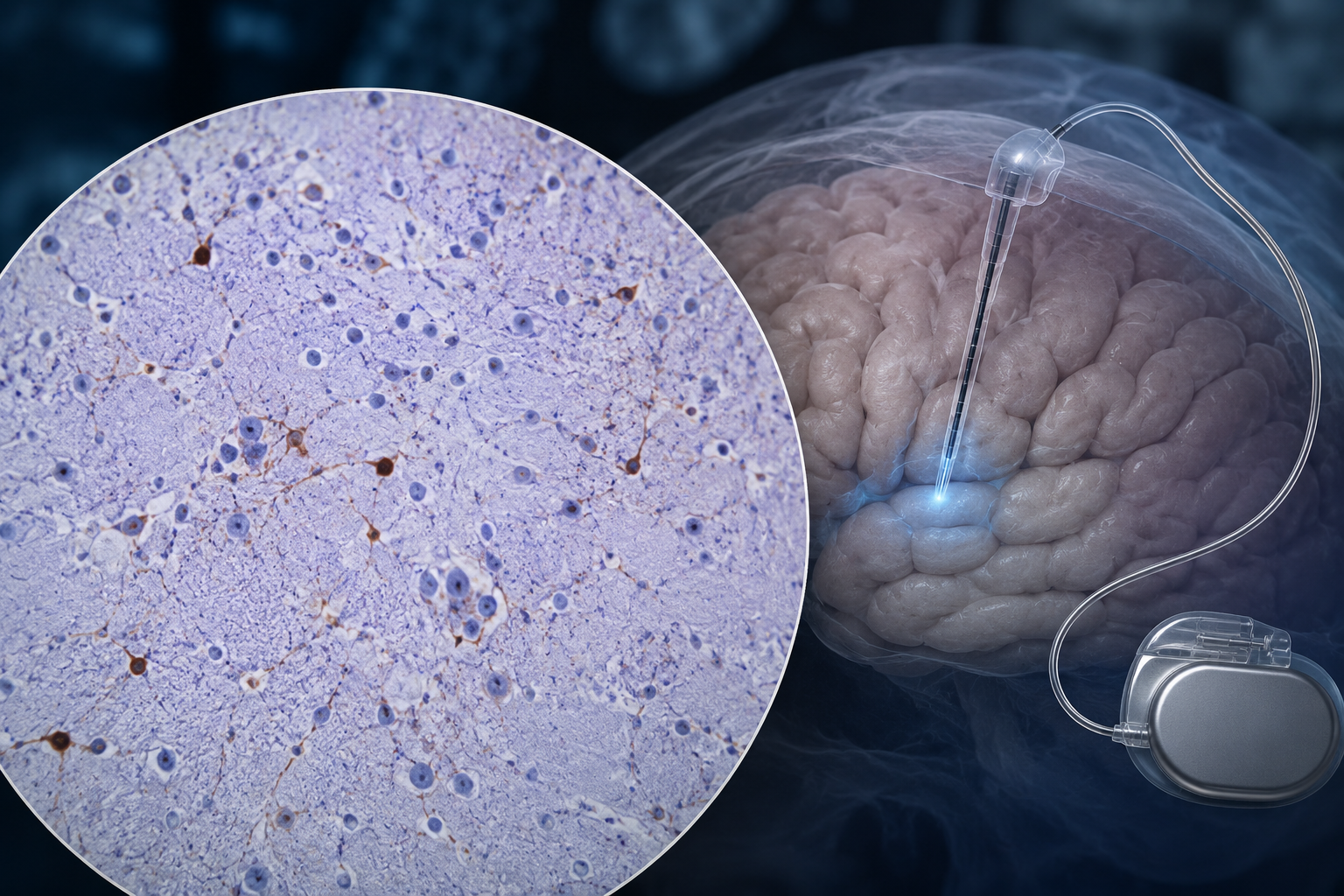
Testing also plays a key role in deciding whether a patient is a good candidate for deep brain stimulation, or DBS, a surgery in which electrodes are placed in specific areas of the brain to help control certain movement symptoms. DBS can bring substantial relief for the right patients, but the decision involves neurological, cognitive, and psychological factors. Neuropsychological testing is one piece of a broader review by a team that includes movement disorder neurologists and neurosurgeons, Underwood said. Patients with significant cognitive impairment may face greater risks. As a rough rule of thumb, Underwood said, dementia “is a contraindication for surgery,” though each case is weighed individually. The testing can also be adapted for patients whose tremor makes written tasks difficult. Someone who can’t complete a timed pencil-and-paper test, for example, may take an oral version that measures the same skills. That keeps motor symptoms from being mistaken for cognitive problems. Richardson noted that some patients put off considering surgery until their symptoms become severe. Underwood said research is now looking at DBS earlier in the course of the disease rather than only as a last resort, though whether and when to pursue it remains an individual medical decision.
For many families, the biggest worry is losing independence. Underwood said the level of help a person needs should match the severity of their impairment, not an assumption that everyone with Parkinson’s will eventually be unable to manage on their own. For people with mild difficulties, simple tools can go a long way. Pill organizers, written reminders, alarms and consistent daily routines all ease the load on memory and planning. Predictable routines can be especially helpful for people who struggle with flexibility and problem-solving, he said. As impairment progresses, caregivers may need to take over medications, finances and other tasks. Even then, Underwood said, patients should stay involved in decisions and activities as much as their abilities allow, preserving not just function but dignity and a sense of control.
Mental health and cognitive health are closely linked, Underwood said. Depression and anxiety can sap concentration and motivation, pulling people away from the exercise, rehabilitation and social activities that help them stay healthy. That withdrawal can, in turn, make it harder to maintain mobility and independence. He urged patients and caregivers to speak openly with their medical teams about emotional and behavioral changes. Hallucinations, growing confusion, depression and unusual behavior shouldn’t be hidden out of embarrassment or fear, he said, because catching problems early opens the door to treatment and support.
Underwood also offered some encouragement. Regular physical activity, good sleep, healthy eating, social connection and mentally stimulating activities all support brain health. He pointed to Mediterranean-style and MIND diets and encouraged people to stay active through exercise classes, community programs or whatever activities fit their abilities. None of those steps guarantees protection against cognitive decline, he acknowledged, but they can support overall health and daily functioning.
A family connection
For Underwood, Parkinson’s is personal. His father lived with the disease for many years and eventually developed dementia, while his mother served as his caregiver.
His father faced the disease with dignity and rarely complained, Underwood recalled. Watching his decline, and seeing what it demanded of his mother, deepened Underwood’s commitment to working with people affected by neurodegenerative disorders. It also showed him that Parkinson’s never affects just one person. Care partners and families face their own emotional and practical challenges as the disease advances, and Underwood praised the National Parkinson’s Institute for offering programs and support for caregivers as well as patients.
His message for both is to speak up early. Understanding what is behind changes in thinking, mood or behavior, he said, gives families a foundation for informed decisions about treatment, independence, and the care ahead. Dr. Robert Underwood appeared on Episode 5 of the National Parkinson’s Institute Podcast. The National Parkinson’s Institute is a Louisville-based nonprofit providing free exercise, education and support programs for people living with Parkinson’s disease and their families. This article is based on the podcast interview and is intended for educational purposes. It is not a substitute for individualized medical advice.
.
Discover more from
Subscribe to get the latest posts sent to your email.