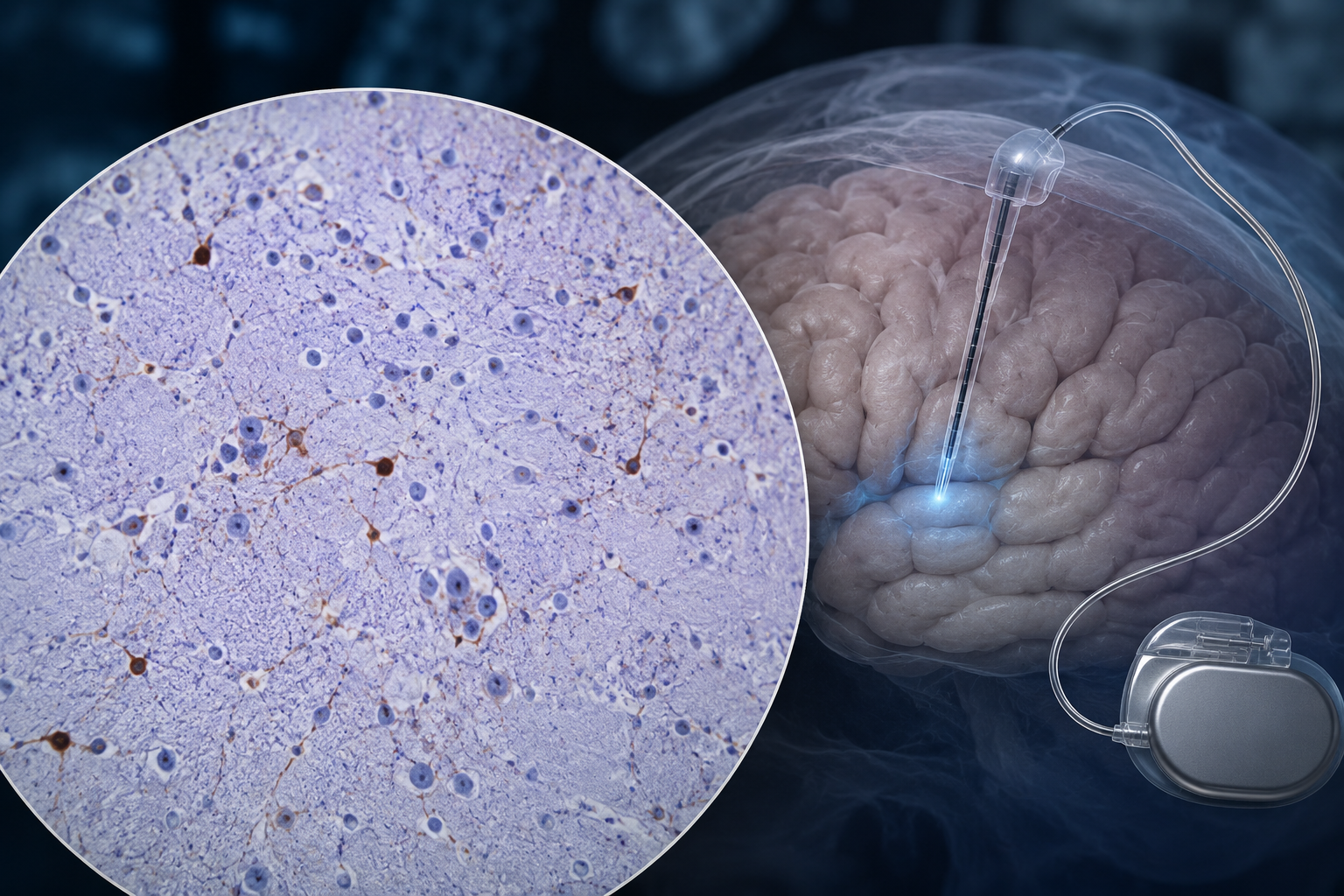
The role of aging in Parkinson’s disease continues to receive renewed attention from some of the field’s most prominent researchers and clinicians. More of them believe that the disease is, in part, a failure of the biological clock that keeps our bodies running, with outside environmental factors changing and disrupting those processes.
This idea has been discussed in peer-reviewed research for several years. In a review published in the NIH’s National Library of Medicine from 2011, researchers argued that the normal loss of dopamine-producing neurons in Parkinson’s Disease are driven by similar mechanisms, creating an age-induced pre-Parkinson’s state and, in turn, setting up the brain to make it more vulnerable to genetic and environmental factors. As the authors put it, “Parkinson’s pathology may be necessary, but aging determines when and how badly it manifests.” Aging alone does not cause Parkinson’s, but it may influence when symptoms begin and how severe they become once other disease-driving factors are present, long before Parkinson’s symptoms appear.
While aging may create biological conditions that increase the body’s risk of many diseases, it does not cause Parkinson’s on its own, a point echoed by Dr. Ray Dorsey, of the Atria Health and Research Institute and co-author of The Parkinson’s Plan, who argues that environmental exposures, not aging itself, drive the disease. “Parkinson’s disease is not a natural consequence of aging; it is an unnatural one.” It is not just found in older men. It affects everyone. It is not predominantly due to genetics. Rather, chemicals in our food, water, and air have created this largely man-made disease.”
Taken together, these views point to a shift in how scientists think about preventing Parkinson’s and other age-related diseases. If aging shapes vulnerability rather than acting as a single cause, then slowing biological aging could delay multiple diseases at once, including Parkinson’s. While other research points to immune-based interventions with the ability to slow biological aging, reinforcing the idea that these processes may be modifiable rather than fixed. This idea is at the heart of what researchers call the geroscience hypothesis.
In the Journal of Gerontology from June 2023, Drugs Targeting Mechanisms of Aging to Delay Age-Related Disease and Promote Healthspan: Proceedings of a National Institute on Aging Workshop a hypothesis was posed, The geroscience hypothesis posits that by targeting key hallmarks of aging we may simultaneously prevent or delay several age-related diseases and thereby increase healthspan, or life span spent free of significant disease and disability.
Evidence supporting this approach is beginning to emerge from large population datasets. New research using data from the UK Biobank answers an important question when it comes to predicting how long people live with Parkinson’s Disease using biological data in a new study published in Nature Communications titled “Biological aging predicts mortality in Parkinson’s patients: evidence from UK Biobank.” Researchers have studied how “old” the body actually is at a cellular and systems level and found that it is a strong, independent predictor of mortality in Parkinson’s disease.

The study, using a metric called Phenotypic Age (PhenoAge), compares the biological age of a person to their actual chronological age using blood biomarkers that doctors normally use to give them a current snapshot of how your body’s major systems are working. It checks your metabolism, organs, inflammation, blood health, hormones, LDL, HDL, triglycerides, glucose, and more. From these results, it can be determined how fast someone is biologically aging, either faster or slower than expected, based on their current age, in a process called PhenoAge Acceleration.
Using UK Biobank data, researchers tracked 569 people with Parkinson’s disease for a median of just over nine years. The study found that those participants with higher biological age and faster biological aging were associated with an increased risk of death, while aging based on just physical age alone wasn’t nearly as impactful.
Authors of this research state that “Although chronological age has been identified as a predictor of decreased survival in Parkinson’s disease, the biological mechanisms underlying this association remain only partially elucidated.” In other words, those older patients who have the disease tend to die sooner, but researchers are still trying to figure out why age affects survival at a biological level.
The paper argues that researchers have mostly treated aging as just a number on a chart, rather than something happening inside the body, while biological aging acts as a living record, capturing the wear and tear a person’s body takes over a period of years that actually shape Parkinson’s outcomes. The study does point out that higher and faster biological ages point to a higher risk of death and shorter survival.
Researchers conclude that: “Existing evidence suggests that aging is the strongest risk factor for PD. As PD is a systemic disorder, relying on individual aging biomarkers provides limited insight into whole-body aging.” The focus is on figuring out better ways to understand individuals who are at higher risk and how slowing down the body’s aging process could help reduce the impact of Parkinson’s disease.
Identifying individuals who are at high risk using biological aging could open the door for many by personalizing treatments and finding ways to slow down aging using existing therapies already in place. These include exercise programs like Rock Steady Boxing, anti-inflammatory strategies such as Mediterranean diets that emphasize fruits, vegetables, whole grains, fish, olive oil, and reducing ultra-processed foods that are incorporated into many prepackaged items today. Sleep optimization may also help slow the biological aging process. Poor sleep can accelerate biological aging by increasing inflammatory markers, while improving sleep can help slow that process.
All of this being said, maintaining a healthy lifestyle may help prevent many diseases and slow the biological aging clock over time.
You can find the study, led by Yong-Ping Chen of the Department of Neurology and Institute of Neurology, West China Hospital, Sichuan University, Chengdu, Sichuan, China, here.
Unless noted, all media by Chris Denny/Adobe
Discover more from
Subscribe to get the latest posts sent to your email.