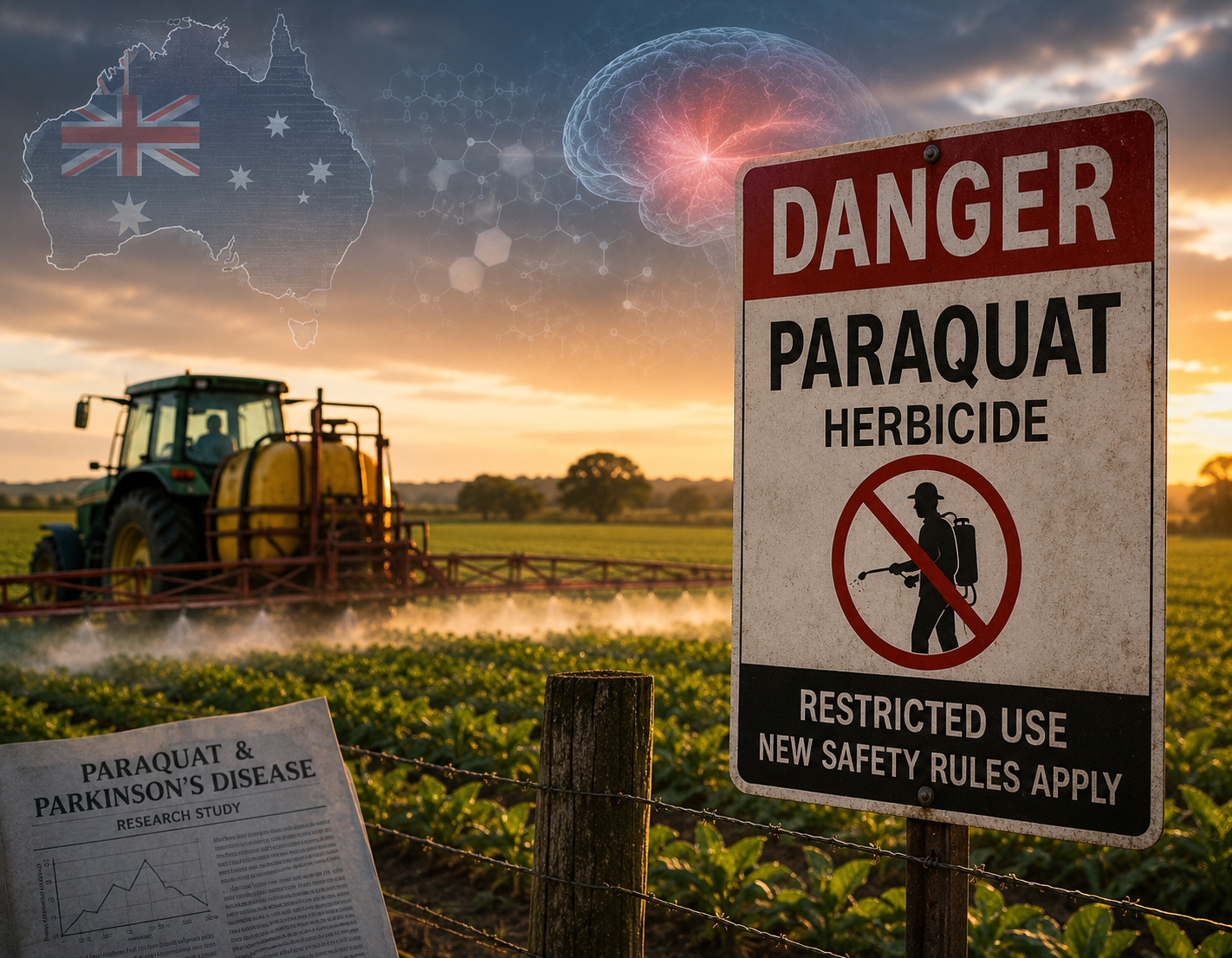
A Common Farm Chemical Is Facing a Federal Ban, and Parkinson’s Patients Are Watching Closely
Most people have never heard the word paraquat, but it’s been sprayed on American farmland for decades, killing weeds efficiently and cheaply on millions of acres of corn, soybeans and cotton. Now a bipartisan pair of lawmakers wants to take it off the market entirely, pointing to a growing pile of research tying the chemical to Parkinson’s disease.
Rep. Anna Paulina Luna, R-Fla., introduced the Paraquat Prevention Act on June 18, with Rep. Chellie Pingree, D-Maine, signing on as co-lead. The bill, H.R. 9357, is now sitting with the House Committees on Agriculture and Energy and Commerce, according to Congress.gov. It had one cosponsor as of this summer, and with Congress out for its August recess, advocacy groups have been urging Parkinson’s patients and families to bring it up with their representatives at town halls before lawmakers head back to Washington.
Here’s what the bill would actually do. It would order the EPA to cancel every registered use of paraquat, essentially pulling its legal authorization to be sold or sprayed at all. It would also close the door on the chemical ever coming back, permanently barring the agency from reregistering it down the road. Any allowance for paraquat residue showing up on food would be revoked, and even the paraquat already sitting in barns and warehouses couldn’t legally be sold or used once the law took effect, according to the bill text posted on Govinfo.gov.
So why target this one chemical? Paraquat has already been banned in more than 70 countries, including every nation in the European Union. “The science is clear about the devastating neurological risks associated with exposure,” Luna said when she introduced the bill, according to a release from her office. Pingree framed it as a case of regulators dragging their feet. “This pesticide is already banned in more than 70 countries and linked to Parkinson’s disease, yet EPA has been reviewing its safety since 2022 without finishing the job,” she said in the same release.
There’s an odd wrinkle in where the chemical actually comes from. China, one of the world’s biggest paraquat manufacturers, banned its own farmers from using it back in 2016, but kept making it for export. An estimated 78 million pounds a year ends up shipped to U.S. ports, according to reporting from Food Safety Magazine. In other words, American farmland is absorbing a chemical that the country producing it won’t let its own growers touch.
Parkinson’s organizations have rallied behind the bill fast. The Parkinson’s Foundation and the American Parkinson Disease Association both came out in support within days of its introduction. “By banning paraquat, the Paraquat Prevention Act would protect Americans and help create a world where fewer people develop Parkinson’s disease in the first place,” said Andi Lipstein Fristedt, the Parkinson’s Foundation’s chief strategy and policy officer, in a post on the foundation’s site. The foundation also points to polling that found 67 percent of voters supported banning or limiting paraquat once they learned of the Parkinson’s link, a number that climbed to 81 percent after they learned more about how people actually get exposed.
The push in Congress isn’t happening in a vacuum. Nearly 6,700 lawsuits are currently working through the courts against paraquat makers Syngenta and Chevron, with plaintiffs arguing that years of exposure gave them Parkinson’s disease, according to legal tracker AboutLawsuits.com. Syngenta has already said it plans to phase out paraquat production worldwide, and settlement talks are reportedly underway. States have started acting on their own too. Vermont has a statewide ban in place, and lawmakers in New York, Pennsylvania, Virginia and Michigan have introduced or advanced restrictions of their own this year, according to tracking by the American Parkinson Disease Association.
None of this guarantees the bill goes anywhere. Congress has tried this before, including a similar Protect Against Paraquat Act back in 2019, and none of those efforts made it into law. What’s different this time is the bipartisan pairing of Luna and Pingree and the wall of advocacy groups standing behind it, though the real test starts now, as the bill sits in committee waiting for the cosponsors and momentum that past versions never found.
Discover more from
Subscribe to get the latest posts sent to your email.