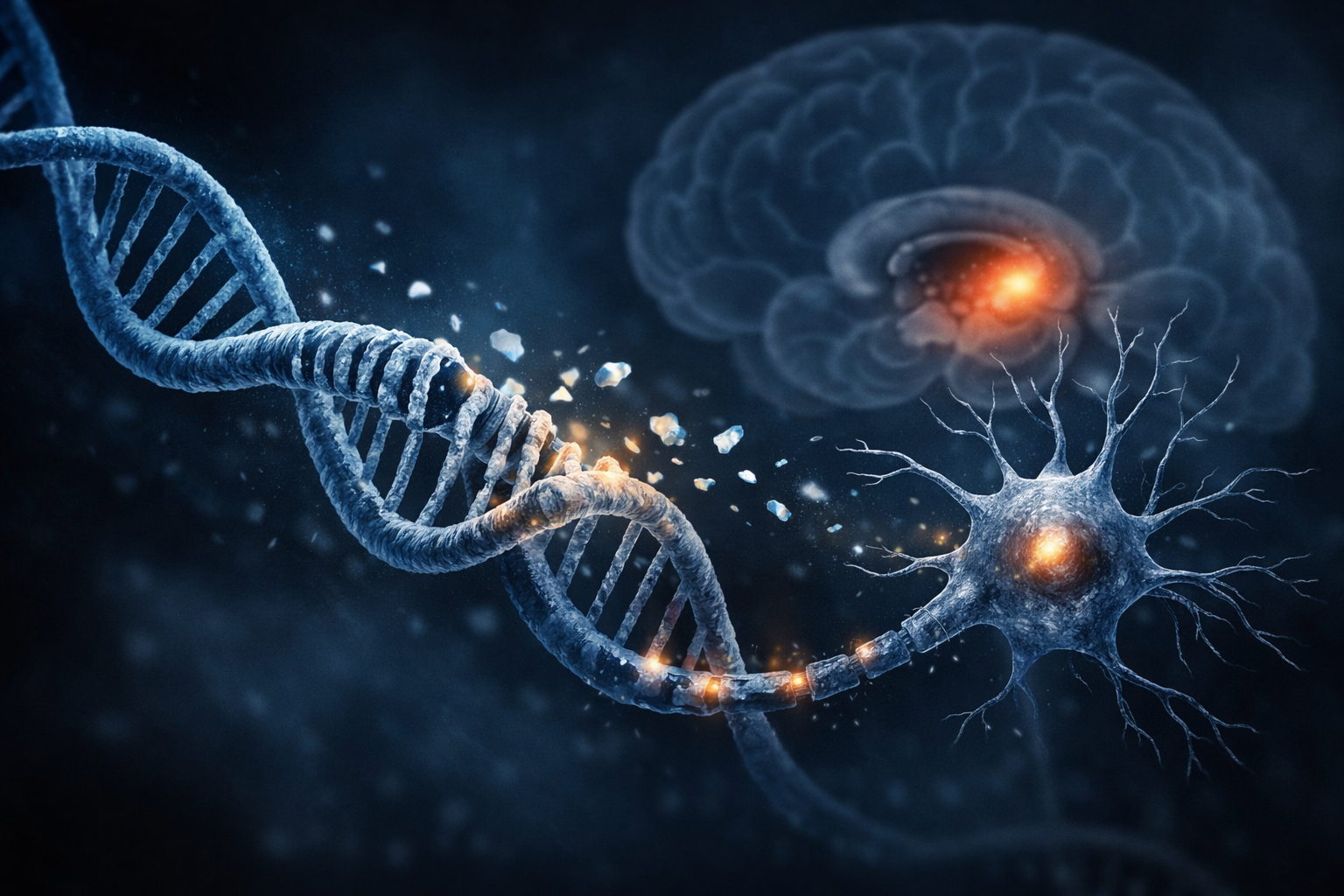
A new review just published in Movement Disorders, authored by Claudio de Gusmão, Vladimir Katanaev, Laura Silveira-Moriyama, Tamara Pringsheim, and Emmanuel Roze, arrives at a moment when the treatment of childhood-onset movement disorders is undergoing its most significant shift in a generation. For decades, care for young patients with dystonia, chorea, ataxia, and related conditions has meant treating what the disorder looks like rather than what causes it. That is changing, and quickly.
The old model is straightforward, if blunt. A child with dystonia gets a dopamine agonist or an anticholinergic, or perhaps botulinum toxin injections, regardless of whether the underlying cause is a single gene mutation, a metabolic disorder, or an acquired brain injury. It works well enough for some symptoms, but it does nothing to address the biology driving the disease, and it often falls short for children with the most severe or progressive conditions.
The alternative gaining ground is what researchers call precision medicine, treatment aimed squarely at the molecular defect itself. It has been made possible largely by the plunging cost of genetic sequencing, which has let clinicians identify the specific gene, and often the specific mutation, behind a child’s symptoms. Once you know the cause, you can start asking whether the underlying protein is missing, malfunctioning, or actively toxic, and design a therapy around that answer.
The clearest proof of concept so far is gene replacement therapy for aromatic L-amino acid decarboxylase deficiency, a rare disorder that leaves children unable to make dopamine and serotonin. Kids with the severe form of AADC deficiency have historically faced early death and profound disability. A gene therapy called eladocagene exuparvovec, delivered directly into the putamen through a single neurosurgical procedure, has changed that trajectory for many patients, reducing dystonia and the disorder’s characteristic oculogyric crises well enough that one modeling study projected it could add roughly twenty five years of survival. It was approved in the European Union in 2022, and a related gene therapy for a form of hereditary spastic paraplegia went from concept to first human treatment in under three years, a pace almost unheard of in pediatric neurology.
RNA-based treatments are following a rockier but still promising path. Antisense oligonucleotides, short synthetic strands that can silence a toxic gene, restore normal splicing, or block a specific mutant protein, have already shown what can go wrong as well as what can go right. A high-profile ASO trial for Huntington’s disease was halted after a phase 3 study found no benefit, and some treated patients actually did worse than those on placebo, though a subgroup of younger patients showed enough of a signal to justify a new trial. The lesson researchers have taken from that setback is not to abandon ASOs but to get sharper about matching the right molecule to the right patient. That thinking underlies a newer approach some of the same researchers have championed, building individualized, one-patient ASOs designed around a single child’s unique variant, an idea de Gusmão has continued to develop this year in a separate paper on how to identify which patients are good candidates for that kind of bespoke treatment.
Not every advance requires a needle or a viral vector. Old drugs are finding new, better-targeted uses. Caffeine, of all things, has shown real benefit for children with ADCY5-related movement disorder, because the underlying mutation raises cyclic AMP levels in a way that caffeine’s adenosine-blocking effect can counteract. Deferiprone, an iron chelator, improves dystonia in a specific subset of patients with pantothenate kinase-associated neurodegeneration. And unbiased drug screening, essentially testing thousands of compounds against cells carrying a specific mutation, has turned up unexpected candidates, including zinc as a way to restore function in a mutant protein linked to GNAO1-related disorder.
Deep brain stimulation, meanwhile, is being refined rather than reinvented. Clinicians have found that DBS targeting the globus pallidus works especially well in specific monogenic forms of dystonia, including those caused by mutations in TOR1A, GNAO1, and KMT2B, and a growing list of rarer genetic causes are showing promising responses too. Focused ultrasound, already used in adults with essential tremor, is now being tested as a less invasive alternative for children with treatment-resistant dystonia.
The obstacle none of this fully solves is rarity itself. Specific, mechanism-based treatments currently exist for a small fraction of the genetic movement disorders now being diagnosed, and the researchers behind this wave of work are candid that the bottleneck is no longer just science. It is infrastructure: too few patients with any single diagnosis in one place to run a traditional clinical trial, and not enough natural history data to know what a meaningful outcome even looks like. Building that foundation, sometimes called clinical trial readiness, has become as central to the field’s near-term future as the therapies themselves.
What the new review by de Gusmão and colleagues seems poised to do is take stock of exactly that landscape, cataloging where genuine disease-modifying treatment has arrived, where it is close, and where the science is still waiting on the infrastructure to catch up.
Okay, in simpler terms what this all means for the youngest of patients:
Doctors used to treat kids with movement disorders based only on what the symptoms looked like, shaky movements, stiff muscles, involuntary jerks, using the same handful of drugs no matter what was actually causing it. Now, genetic testing can often pinpoint the exact gene involved, which opens the door to treatments aimed at the real cause instead of just the symptoms.
It matters because treating the cause, not just the symptom, can mean real, life-changing improvement instead of just easier days. The clearest example: kids born with a rare condition called AADC deficiency used to face early death and total disability. A single gene therapy procedure has let some of them walk, and a few even ride bikes.
Gene therapy will replace or fix a broken gene in a single procedure, while personalized “molecular patch” treatments, known as ASOs, are custom-built for one child’s specific genetic mutation. Some existing drugs are simply being used more precisely, like caffeine, which turns out to genuinely help one specific genetic condition now that scientists understand why. And deep brain stimulation has been refined to work best for specific genetic causes of dystonia.
The field is moving from “manage the symptoms” to “fix the cause” and for some children, that shift is already changing lives. For most, it’s still a few years away.
Discover more from
Subscribe to get the latest posts sent to your email.