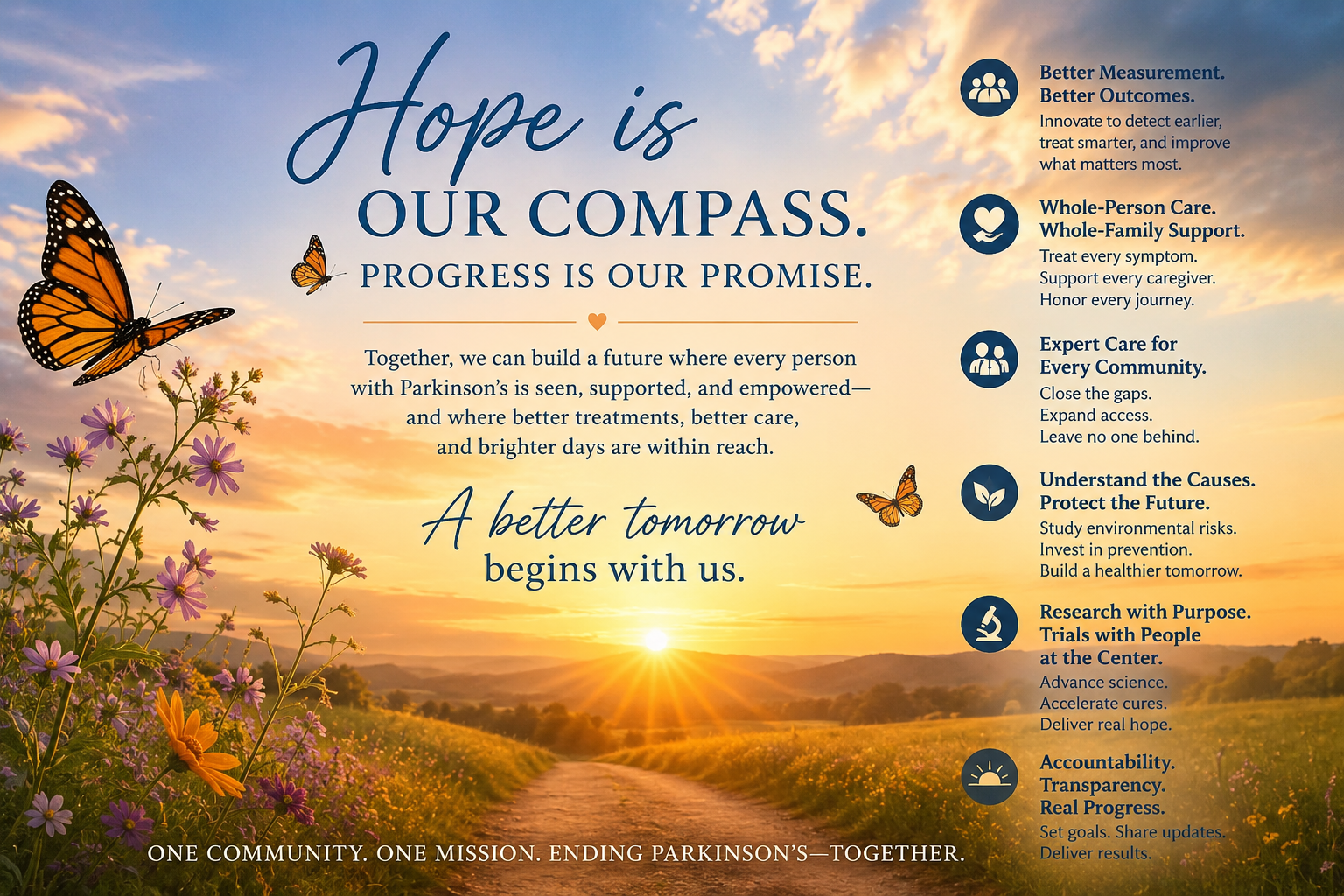
Whether you’re newly diagnosed with Parkinson’s disease, supporting a loved one, or simply seeking information, you’re not alone. According to the Parkinson’s Foundation around 90,000 people in the United States are diagnosed with Parkinson’s each year affecting not just those with the condition but also their caregivers and families.
Parkinson’s Disease is a movement disorder that affects the movement centers of the brain. Patients may experience stiffness and rigidity, balance problems, difficulty with coordination, and mood changes. While Parkinson’s usually develops after the age of 60, it can also occur in those under 60. Parkinson’s knows no age limits, affecting both young and older individuals, and its impact can reach far beyond motor symptoms to influence daily functioning and quality of life.
Juvenile Parkinson’s and Young Onset Parkinson’s Disease
Did you know that, according to the Parkinson’s Foundation, around four percent of one million people in the United States who have Parkinson’s are diagnosed with Young-Onset Parkinson’s Disease? This form of Parkinson’s affects individuals between the ages of 20 and 50 and exhibits a slower progression of symptoms and cognitive decline compared to those over the age of 60.
Juvenile Parkinson’s Disease (JPD) affects individuals under the age of 20. It is believed to be linked to genetic mutations in the PARK2 (parkin), PINK1, DJ-1, and LRRK2 genes, with environmental factors having less of an impact than Parkinson’s in people over the age of 60. Those diagnosed with JPD often present symptoms such as tremors and bradykinesia, with dystonia being one of the first symptoms to appear. However, due to the young age of the patient and the rarity of the disease, a diagnosis of JPD is made through either a neurological exam or genetic testing. Nevertheless, not all genetic forms of Parkinson’s exhibit these features, making it difficult to differentiate what type without the individual undergoing genetic testing. Patients with JPD are highly responsive to Levodopa according to the NlH, producing improved motor symptoms, but are prone to treatment-induced complications like Dyskinesias (involuntary movements of the arms, face, or legs) sooner and often more severely compared to late-onset Parkinson’s. Researchers are developing new therapies that will pinpoint and target genetic causes, with gene and cell-based treatments in the future. JPD is autosomal recessive, or in simpler terms, both parents must have the same mutated gene, and even then, there’s only a 25% chance of developing JPD.

Huntington’s Disease
Huntington’s Disease is another neurodegenerative disorder like Parkinson’s, but unlike Parkinson’s, the cause is directly related to a genetic mutation passed down from one family member to another. However, the physical and mental symptoms, like uncontrolled movements and emotional and social anxieties, remain the same. With medications like carbidopa/levodopa, Parkinson’s patients can live a relatively normal life. Huntington’s Patients can take medications like Austedo for motor symptoms, and several types of antidepressants are available. However, unlike Parkinson’s, Huntington’s disease is fatal.
Lewy Bodies
Parkinson’s disease is described as the loss of neurons in the basal ganglia (the area that produces dopamine) and the accumulation of abnormal clumps of a protein called alpha-synuclein (aSyn), known as Lewy bodies. Alpha-synuclein normally plays a role in synaptic function (a process by which neurons communicate with each other through specialized junctions called synapses) and is believed to be responsible for helping to modulate DNA repair processes within cells. However, when alpha-synuclein misfolds and aggregates into Lewy bodies, it can no longer carry out these protective functions. As a result, DNA repair may be impaired, contributing to cellular damage and neurodegeneration. “Lewy bodies” (named after the German neurologist Dr. Friedrich Lewy) accumulate in the cerebral cortex (perception, thought, and language), limbic cortex (emotions and behaviors), hippocampus (portion of the brain that forms memories), basal ganglia (an area in the brain responsible for body movements), brainstem, and olfactory pathways (the route smell information taken from the nose to the brain) affecting thinking, movement, and behavior areas in the substantia nigra of the brain.

Photo credit: iStock.adobe.com
Parkinsonism Versus Parkinson’s
I’ve heard the term before, but what’s the difference?
Parkinsonism is a term used to describe several neurological disorders that are responsible for movement disorders that exhibit similar symptoms to Parkinson’s, like tremors, slow movement, balance problems, and stiffness. Types of Parkinsonism include Multiple System Atrophy, Drug-Induced Parkinsonism, (according to NLM “the second-most-common etiology of parkinsonism in the elderly after Parkinson’s disease”) Dementia with Lewy Bodies (often confused with Alzheimer’s), and Secondary Parkinsonism (caused by medications (especially antipsychotics), brain injury, stroke, or infections). Complications can include difficulty with daily tasks or other problems like swallowing or eating. According to Healthline, “Parkinsonism can develop suddenly. It’s linked to stroke, brain injury, medication use, and, less commonly, infections. Parkinsonism usually develops more suddenly and includes symptoms like hallucinations or dementia.”
What are Functional Movement Disorders (FMDs)
Functional Movement Disorders are abnormal movements of the body that someone might confuse with Parkinson’s or Huntington’s Disease, like tremors, problems walking, jerking movements, and spasms. However, these motions are not caused by a loss of dopamine or nervous system damage, but by how the brain communicates with the body, and are classified as Functional Neurological Disorders (FNDs). FNDs do not have an understandable physical cause when tested and are considered a genuine medical condition. They may be triggered by stress, trauma, illness, or sometimes have no identifiable cause, but they stem from a functional breakdown in brain-body communication.
Getting Help
There is ongoing research into these diseases, and while there is still no cure, great progress is being made to provide improved medications, gene therapy, and support groups. Exercise programs like Rock Steady have been shown to slow the progression of Parkinson’s to help people live a better life and cope with the disease.
Organizations like the National Parkinson’s Institute, the Michael J. Fox Foundation, the Parkinson’s Foundation, and the American Parkinson Disease Association all have resources available to guide patients and families with educational support about possible surgical alternatives like Deep Brain Stimulation and High-frequency Ultra Sound. Contact your physician’s office, which can help you locate the best resources for your specific needs in your area.
You may also call the Parkinson’ Foundation for guidance and support. They are available Monday through Friday, 9 AM to 7 PM, at 1-800-4PD-INFO (473-4636) or online at www.parkinson.org
Featured image: Adobe Firefly for C. Denny
This story is a follow up to:
The Ongoing Race to Cure Parkinson’s Disease
Discover more from
Subscribe to get the latest posts sent to your email.