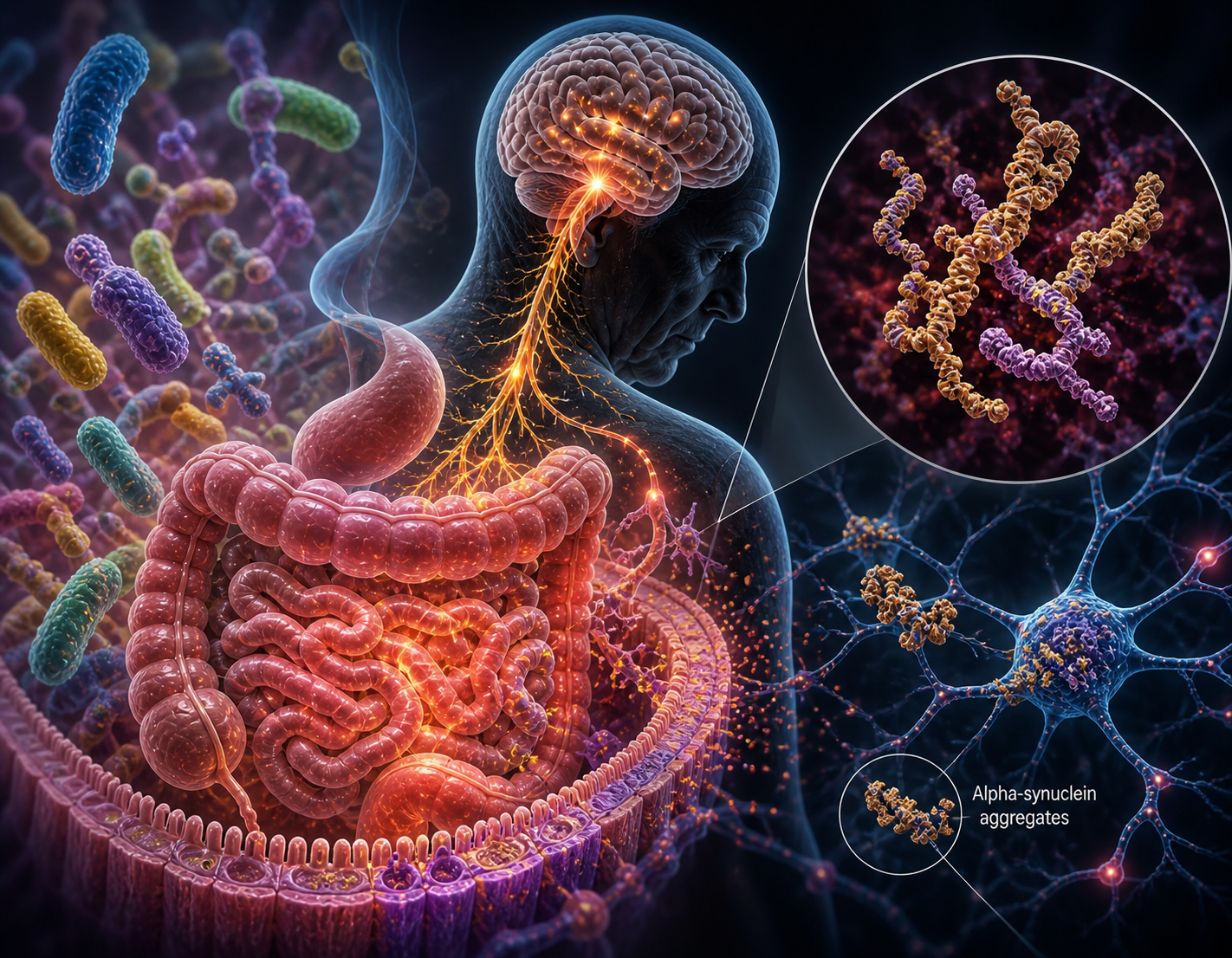
New research identifies a key brain network behind Parkinson’s posture problems and shows how gentle magnetic stimulation could help restore balance.
When people think of Parkinson’s disease, tremors often come to mind. But many patients face another debilitating challenge: their bodies slowly lean forward, tilt to one side, or bend into a stooped posture that makes walking, balancing, and daily movement increasingly difficult.
Doctors have long understood that these postural abnormalities aren’t simply caused by weak muscles. Instead, they stem from changes in the brain’s ability to coordinate movement. What hasn’t been clear is which brain regions are responsible, or whether those networks can be retrained.
A new study published in Movement Disorders (2025) by Dr. Tian-Ying Wu and colleagues offers some of the most compelling evidence yet. Using MRI brain mapping and non-invasive magnetic stimulation, the team found that postural control in Parkinson’s depends on a visual-motor network connecting two key regions of the brain, the Visual cortex and the Motor cortex.
The visual cortex, located in the occipital lobe at the back of the brain, is known as the primary visual cortex. It acts as the first processing center for visual information coming from the eyes. After this initial processing, the information is transmitted through various pathways. Meanwhile, the primary motor cortex, found in the frontal lobe, controls the initiation and execution of voluntary movements. It is the diminished capacity of this network that can lead a person with Parkinson’s to have issues with posture. The study points out that reinforcing this network between the visual and motor cortex can measurably improve posture.
Visuomotor integration is essential for many everyday activities, such as handwriting, drawing, and coordinating eye and hand movements like catching a ball. Impairments in this system can impact fine motor skills and are linked to developmental conditions like Autism Spectrum Disorder (ASD), according to a study published in the National Library of Medicine.

Mapping the Posture Network
Researchers examined 181 people with Parkinson’s disease using structural and functional MRI scans. Some participants had a normal posture, Others showed mild bending. and a third group had pronounced forward or lateral leaning. From that group, 45 volunteers underwent ten sessions of repetitive transcranial magnetic stimulation or rTMS, a therapy that uses magnetic pulses to activate neurons in targeted brain regions. The team focused on two areas that stood out in imaging analyses: The lingual gyrus, a part of the visual cortex that helps the brain understand spatial orientation, and the precentral gyrus, the brain’s primary motor cortex, which sends movement commands to muscles.
What the Study Found
Brain scans showed that people with posture problems had noticeable tissue loss and weaker connections in areas of the brain that control movement and vision — the lingual and precentral gyri. The more severe the damage, the worse their posture became.
After rTMS treatment, participants showed less body tilt and stood more upright than before the test. Their brain activity increased in the left lingual gyrus (which is associated with spatial orientation), as well as in its connection to the inferior parietal lobule (a region involved in balance and spatial awareness). The degree of posture improvement corresponded to the increase in brain connectivity.
Importantly, the treatment was safe and well-tolerated, with only mild headaches or scalp tingling reported by the participants of the study, with no serious side effects.
Beyond Muscles: A Brain-Based View of Posture
This study underscores that controlling posture is fundamentally brain-based, not just purely muscular. The lingual gyrus processes visual information about body position in space, and the motor cortex uses that information to keep the body aligned. When Parkinson’s disrupts this visual-motor loop, posture begins to deteriorate.
By stimulating the network that connects the visual and motor cortex, rTMS may restore connection and coordination between the two, the seeing and moving, and offer a potential new tool to complement traditional therapies already being used.
What Comes Next
Although promising, the authors caution that the trial was small and was conducted at a single site. Larger, blinded studies are needed to confirm how long these benefits last and whether similar effects can be achieved in other centers. The approach could inspire combined therapies that merge brain stimulation with visual-feedback training and spatial-awareness physical therapy, offering renewed hope to those struggling with postural instability.
Media by Chris Denny/Adobe
Discover more from
Subscribe to get the latest posts sent to your email.