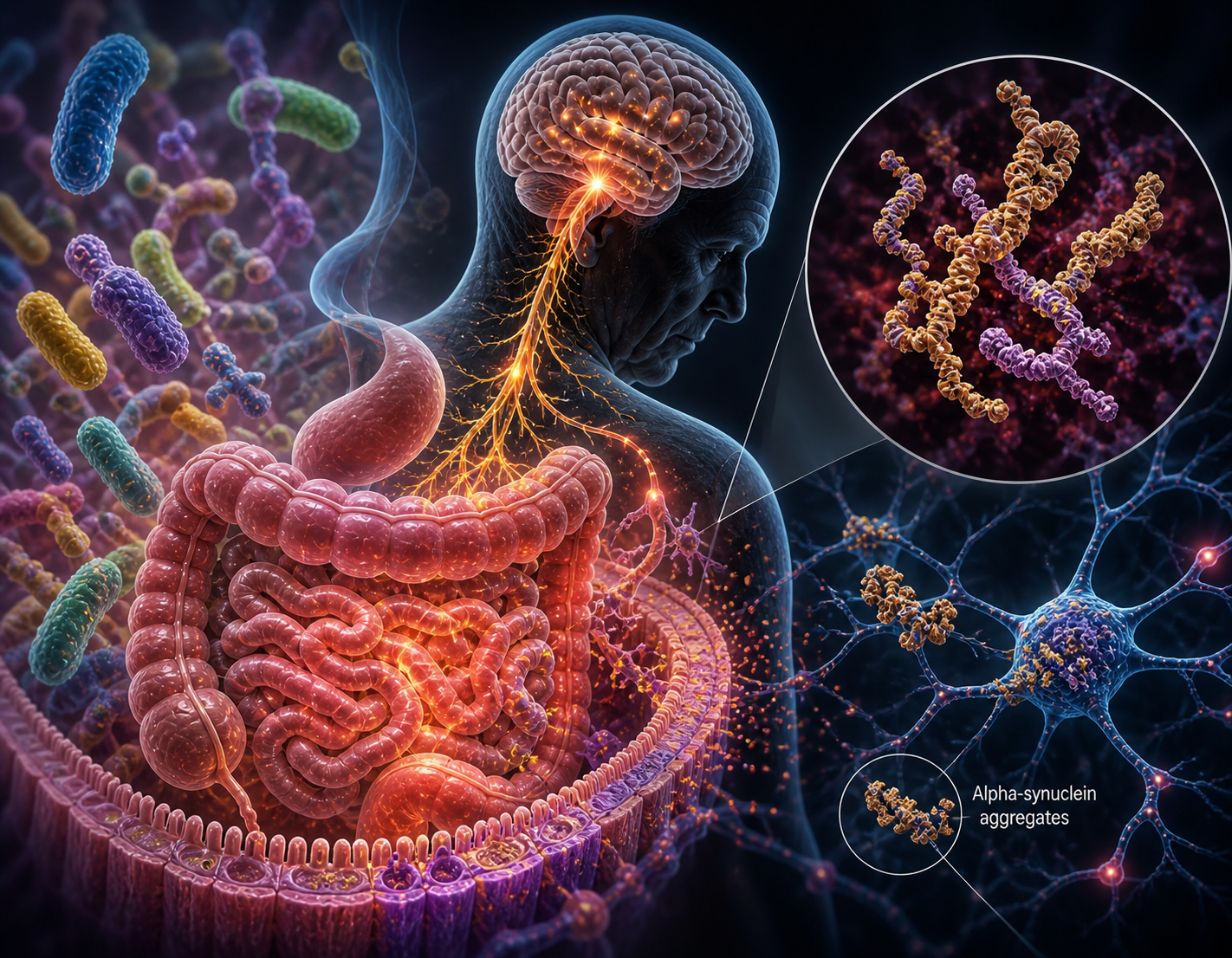
An April 20th study published in Nature Medicine titled “Microbiome signature of Parkinson’s disease in healthy and genetically at-risk individuals” points to a pattern discovered by researchers in the gut microbiome that appears in an individual right before symptoms of Parkinson’s disease appear. In people with Parkinson’s, the microbiome showed that over 170 species of bacteria were significantly altered compared to healthy individuals, with increases in certain types of bacteria like Bifidobacterium and Streptococcus, and declines in beneficial and anti-inflammatory bacterial species such as Roseburia and Faecalibacterium. Researchers point out that these are not random changes but form a recognizable biological signature that is associated with Parkinson’s disease. For patients who carry the GBA1 genetic mutation but have not yet developed symptoms, the microbiome is already partially shifted toward a Parkinson’s-like pattern. Those with the mutation can show early changes in the gut microbiome before symptoms begin. Their microbiome falls into what researchers describe as an intermediate state, no longer fully healthy, but not yet Parkinson’s.
Simply put, a healthy microbiome is what researchers use as a baseline, and from there, they can follow how the gut begins to shift as Parkinson’s develops. In this study, that shift wasn’t limited to people already diagnosed; those carrying the GBA1 mutation showed a microbiome that the authors describe as “intermediate between healthy controls and patients with PD,” suggesting that changes could already be underway even before symptoms start to appear. Even more so, these changes to the microbiome, tracked with early warning signs and disease progression, raise the possibility that what’s happening in the gut may reflect how close someone is to developing Parkinson’s. According to researchers, “Gut microbiome alterations can identify … individuals … progressing toward PD, thus serving as an early marker of disease development in the premanifest phase.”
The study identifies about 20% of those who seem completely healthy with no diagnosis and no known genetic risk, had gut bacteria that looked similar to what is found in those patients with Parkinson’s disease. These individuals weren’t diagnosed with Parkinson’s, but many of them showed minor warning signs, such as a poorer diet, mild non-motor symptoms, Parkinson’s type symptoms, such as depression or problems with what the body normally handles automatically. In other words, some people may feel normal with no noticeable changes in their health, but changes in their biology could already be starting to shift toward Parkinson’s well before they or their physician could realize it.
Researchers believe the process of the gut microbiome changes may be a step-by-step process, gradually developing over time, shifting consistently and measurably in a system-level reshaping of the gut ecosystem. These changes are consistent across different groups and increase step by step, from healthy people, to those at risk, to those with Parkinson’s disease. Researchers are calling this a “coherent” shift, meaning the same sets of bacteria are changing in the same way at each stage, showing that it’s not random noise, but a clear, coherent pattern that researchers think is “very unlikely to happen by chance.”
The study doesn’t point to a single cause, but strongly suggests a mix of biological, genetic, and environmental factors working together to make these changes, including the changes made by the GBA1 mutation, the loss of good anti-inflammatory, gut-protective bacteria that help maintain the lining of the gut and reduce inflammation called Butyrate, and the rise of pro-inflammatory bacteria that help drive inflammation that weakens the gut over time making the lining more vulnerable to leaking which could promote a higher risk environment for Alpha Synuclein protein misfolding.
Researchers in this study found that gut bacteria seem to change as the disease progresses. For those with Parkinson’s disease, people in more advanced stages tend to have more disrupted gut bacteria, which lines up with how long they’ve had the disease. Think of it like a backyard garden that isn’t being maintained. At first, it looks fresh and balanced. But over time, without care, weeds begin to take over, and the whole garden starts to decline. The longer it goes unkept, the more it drifts from what it originally was. That’s similar to what researchers are seeing in Parkinson’s disease, as the disease progresses, the gut microbiome gradually shifts further away from its healthy state.” While medications may still play a role, research findings suggest that the changes are not driven by just treatment alone, but the disease process that is slowly and gradually reshaping the gut over time.”
Diet and lifestyle changes have an impact and a role in the health and changes of the microbiome. Those who have a more “Parkinson’s-like” gut profile also tended to have an overall lower quality of diet and ate less of foods like fruits and vegetables, which helps shape the quality of the gut microbiome and helps shape the environment where the disease could develop. Diets low in fiber and plant-based nutrients could also reduce beneficial, anti-inflammatory bacteria, while allowing more pro-inflammatory species to take hold—the same pattern seen in Parkinson’s patients.
Our diet plays an essential role in shaping our gut environment. This is why man-made chemicals that are used to help produce most of the foods we grow need to be strictly monitored and regulated. Pesticides like Paraquat, which have been linked to Parkinson’s disease, are still used across the United States, even as they’ve been banned in many other countries, despite the evidence that they can damage brain by lls, drive oxidative stress, and disrupt the same b biological pathways implicated in neurodegeneration. Emerging research suggests exposure to foods sprayed with these pesticides suggests that toxic exposures can alter the balance of gut bacteria by reducing beneficial, anti-inflammatory species while allowing more pro-inflammatory microbes to take hold.
More and more research suggests the importance of gut health and its impact on the rest of the body. Parkinson’s disease may not begin with a tremor, but in areas of the body we’re only now beginning to understand. The gut microbiome is emerging as one of those early signals; together, these findings point to changes in how Parkinson’s is understood, not as a sudden neurological event, but as a gradual, system-wide change in the body that may begin years before diagnosis. If confirmed through long-term studies, the gut microbiome could become a critical tool for identifying those at risk and intervening earlier than ever before, offering a glimpse into a disease processes that unfolds quietly over time. While much remains to be proven, studies like this are helping reshape how researchers think about detection, risk, and ultimately, prevention.

Discover more from
Subscribe to get the latest posts sent to your email.