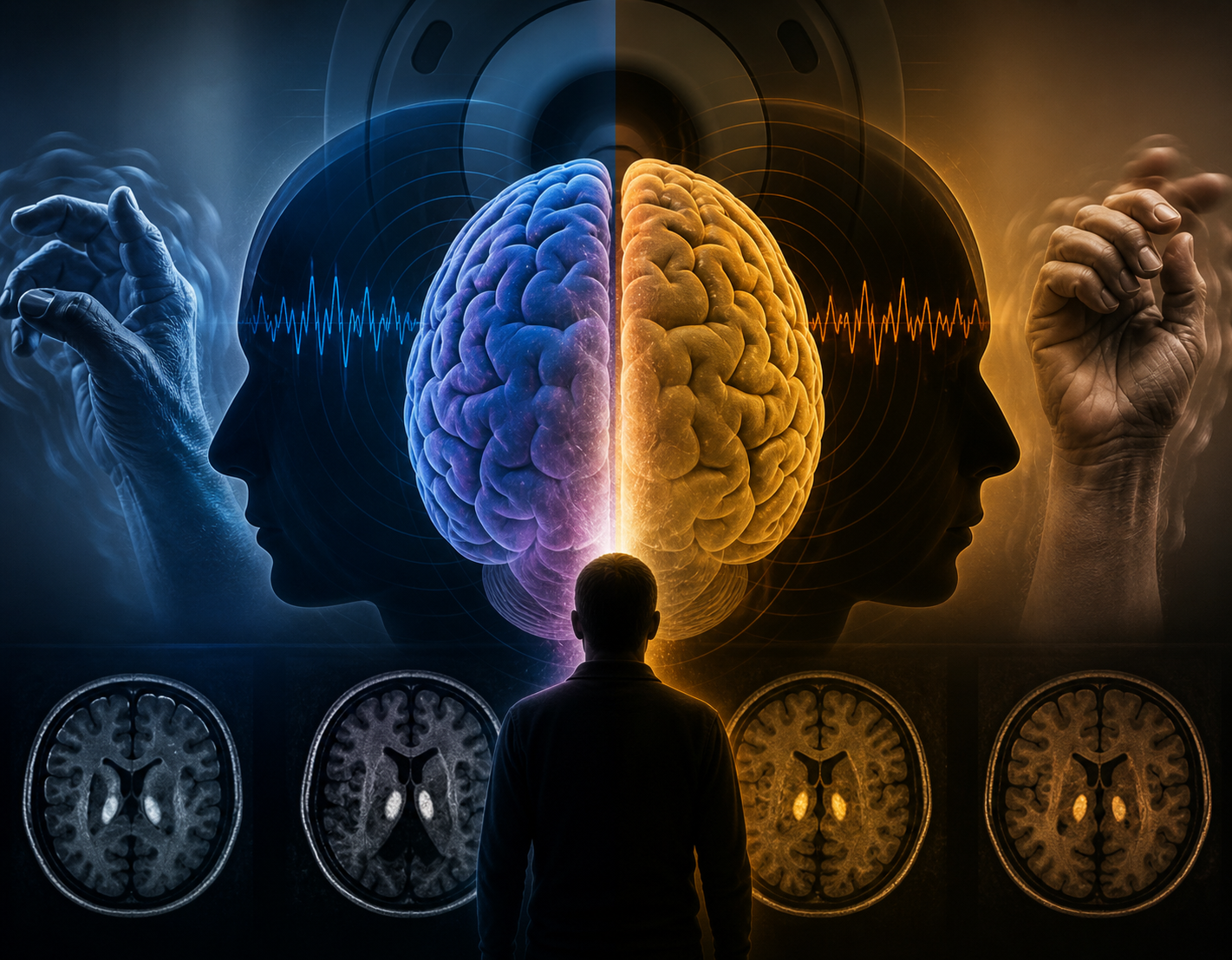
If you’ve read the stories on Our World in Words and Film, then you’ve likely seen the figures reported by the Parkinson’s Foundation and other studies—figures that paint a concerning picture. Each year, 90,000 people in the U.S. are diagnosed with Parkinson’s disease, and an estimated 1.1 million Americans are currently living with it. That number is projected to rise to 1.2 million by 2030, according to data highlighted by the Parkinson’s Foundation. On a global scale, a recent study estimates that cases could reach 25.2 million by 2050, making Parkinson’s disease not just a national health threat to the people of the United States, but a worldwide health crisis. As the population ages, these numbers are expected to continue climbing as we search for a cure.
Parkinson’s disease has been documented throughout human history, with references dating back to the 10th century B.C.E. The first formal medical description came in 1817, when James Parkinson identified the condition as “paralysis agitans” in “An Essay on the Shaking Palsy“. The disease was later renamed “Parkinson’s Disease” after him by Jean Martin Charcot.

Infographic by Chris Denny
Researchers around the world work tirelessly—whether in labs, offices, or perhaps their homes—to advance current and new research. Organizations like the Michael J. Fox Foundation and the Parkinson’s Foundation raise millions of dollars annually to fund research efforts. Groups like the National Parkinson’s Institute work directly with patients to help improve or maintain their quality of life. They do this by offering programs like Rocky Steady Boxing and other resources freely, fostering community support among individuals facing the same challenges.
There’s Progress
Breakthroughs are happening at a faster pace now than they were before. Scientists recently mapped a key protein called PINK1, a gene that finds and maintains mitochondria in the brain. The mutations in this protein were identified as having a significant impact on the development of Early-Onset Parkinson’s disease in individuals under the age of 50 and in inherited forms of the disease. The discovery of this could lead to medications that target the mutation and provide treatment options for these specific types of patients. Thanks to the help of CRISPR technology, researchers are able to identify and detect more genes associated with the disease. CRISPR is a technology that allows for the modification of selective DNA, which may allow doctors and researchers to identify, modify, or remove those genes known to cause Parkinson’s Disease.
Add to that a growing list of FDA-approved drugs being repurposed for Parkinson’s, like Amantadine, with several more currently being tested. Not to mention a recent update to Carbidopa/Levodopa called Crexont. The medication has longer-lasting effects, combining both immediate and extended release forms of levodopa and carbidopa to relieve symptoms longer.
There’s a sense that we’re finally turning a corner toward therapies that don’t just manage symptoms but may slow the disease’s progression.
New and Better Tools
With the rise in artificial intelligence and machine learning, new tools are transforming how Parkinson’s is diagnosed and monitored.
- The Parkinson’s Foundation of Australia is using human-computer interaction and AI in an application called Keysense, a tool to analyze the potential for Parkinson’s by typing your keystrokes on your home computer or laptop. Powered by AI, requiring only a webcam, it can deliver results with over 88% accuracy. This means people in rural or underserved areas could soon get meaningful assessments without ever stepping into a clinic. These tools aren’t just convenient; they could help identify the disease earlier, providing early treatment for someone who can’t get medical help immediately.
- Vision MD is an open-source AI tool developed at the University of Florida that uses video to objectively track movement in people with Parkinson’s by analyzing standard motor tasks and gives precise, unbiased data on speed, range, and consistency.
Other tools that use AI can detect Parkinson’s simply by analyzing breathing patterns while they sleep. The CUE1 device uses vibrations to help people with Parkinson’s improve movement, balance, and reduce symptoms like freezing and slowness. Someday, it may be possible that an AI-based device may be able to completely regulate Parkinson’s symptoms or eliminate them altogether by an implant in some far future.
The Non-Motor Effects of Parkinson’s Disease.
The impact of mental health on patients with Parkinson’s Disease is significant. Depression, anxiety, fatigue, and apathy aren’t just side effects; they can play a major role in how the disease progresses, especially when it comes to cognitive decline. People might start losing interest in things they once loved, places they enjoyed going, hobbies they used to look forward to, or they may simply feel their mood slipping over time.
Many will see everyday challenges like sleep disturbances, experiencing Restless Leg Syndrome, REM Sleep Behavior Disorder (acting out dreams, sometimes violently), and Excessive Daytime Sleepiness. These symptoms can have a severe impact on marital relationships or caregivers over the long term as the symptoms get worse. Patients will also experience a decline in memory as the disease progresses (some worse than others), loss of bladder control, and more. Many newly diagnosed patients (about 30%) show signs of a decline in cognitive issues when they are diagnosed. A third of these people may develop dementia within five years. Men, in particular, seem to experience faster cognitive decline, making early detection and support even more critical.
That’s where choices in lifestyle and exercise can make a big difference. Studies are consistently showing that staying active helps slow the progression of the disease and keep symptoms at bay longer. Just 2.5 hours of exercise weekly can improve your balance, mood, sleep, memory, and overall quality of life. It’s never too late to start, and benefits have been observed even in those who began exercising after diagnosis.
On Parkinson’s and Suicide
Unfortunately, not everyone can seem to handle the challenges that come with living with Parkinson’s Disease. A study completed in Taiwan between the years 2005 to 2014, published on the JAMA website, followed over 35,000 people with Parkinson’s disease and compared them to more than 143,000 people without it over 11 years. Even after accounting for other health issues and mental health conditions, those with Parkinson’s had nearly twice the risk of suicide, with 151 people with Parkinson’s dying by suicide, a rate of 66.6 per 100,000, compared to 32.3 per 100,000 in those without the disease.